
Last updated: November 15, 2026
Quick Answer
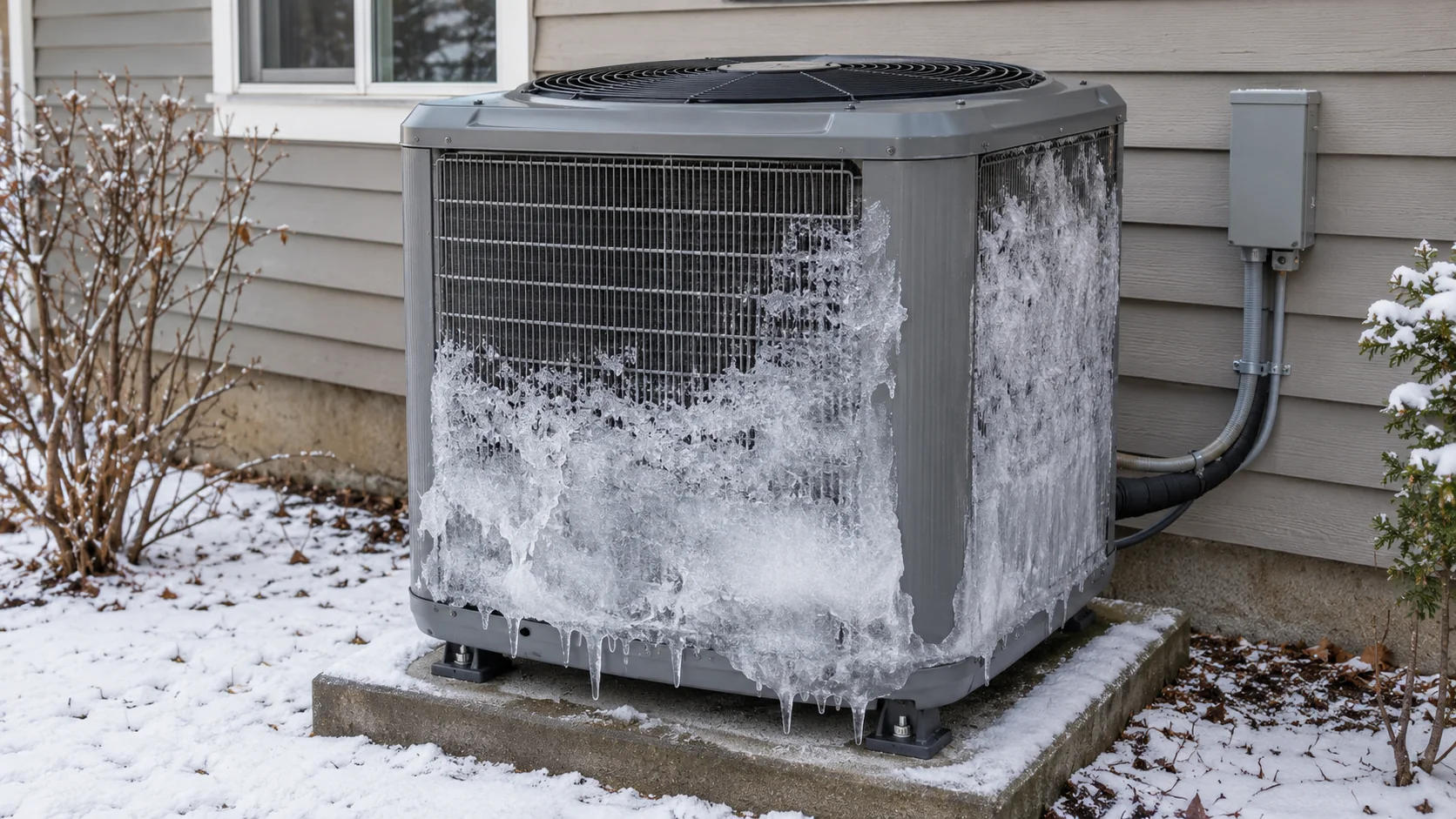
Heat pump frozen outside? A thin layer of frost that melts during a normal defrost cycle is expected. Thick ice that remains after defrosting, blocks airflow, or reaches the fan needs attention. A thin layer of frost that melts during a defrost cycle is normal. Thick ice that stays on the coil after defrosting, blocks airflow, or reaches the fan needs attention. If the unit is encased in ice or the fan is hitting ice, turn the heat pump off at the thermostat and call an HVAC technician. Leave the ice in place and keep tools and hot water away from the unit.
Why Does a Heat Pump Freeze Outside in Winter?
In heating mode, your heat pump pulls heat from outdoor air. The outdoor coil can be colder than the air around it, so moisture can freeze on the coil even when the outdoor temperature is a little above freezing. The system periodically warms the outdoor coil during a defrost cycle to clear that buildup. You may see a brief cloud of steam as the frost melts. Trane explains how a heat pump defrost cycle works.
| What you see | What to do |
|---|---|
| Thin frost that clears and the house stays warm | Let the heat pump run normally. |
| Thick ice remains after defrosting or keeps building up | Schedule HVAC service. |
| Ice encases the unit, blocks the fan, or causes scraping | Turn the system off at the thermostat and call for repair. |
5 Checks Before You Call for Heat Pump Repair
If you find your heat pump frozen outside, start by checking whether the frost clears during defrost.
1. Check whether the frost clears during defrost
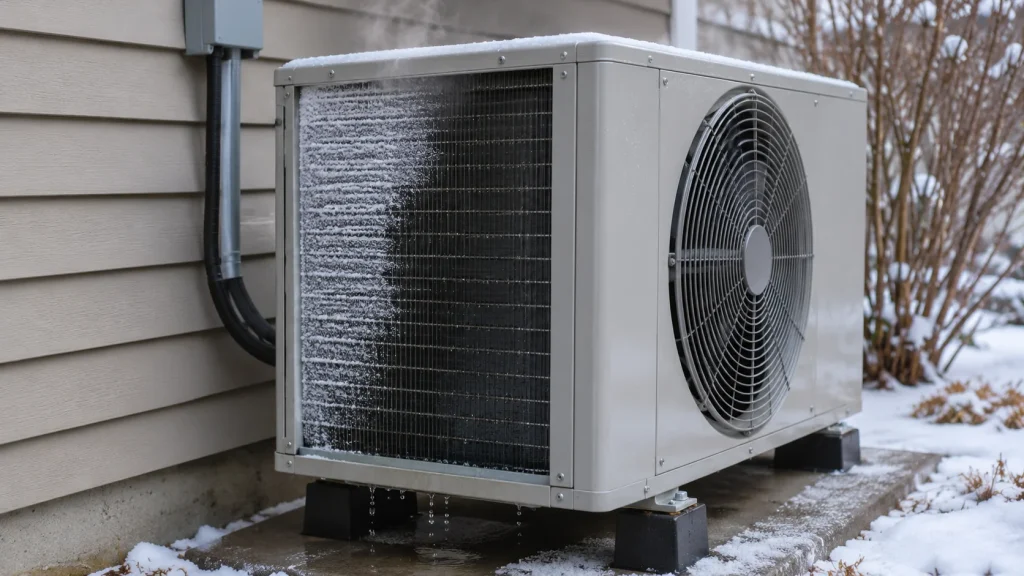
If there’s only a light coating of frost and the house is still heating, observe the unit from a safe distance during its next normal defrost cycle. You may see steam or water dripping below it. The timing varies by model and weather, so judge the cycle by whether it clears the frost and the system resumes heating.
If you can see a thick sheet of ice across the coil or hear the fan scraping, skip the wait and shut the system off at the thermostat.
As an Amazon Associate I earn from qualifying purchases
2. Look for loose snow or debris around the outdoor unit
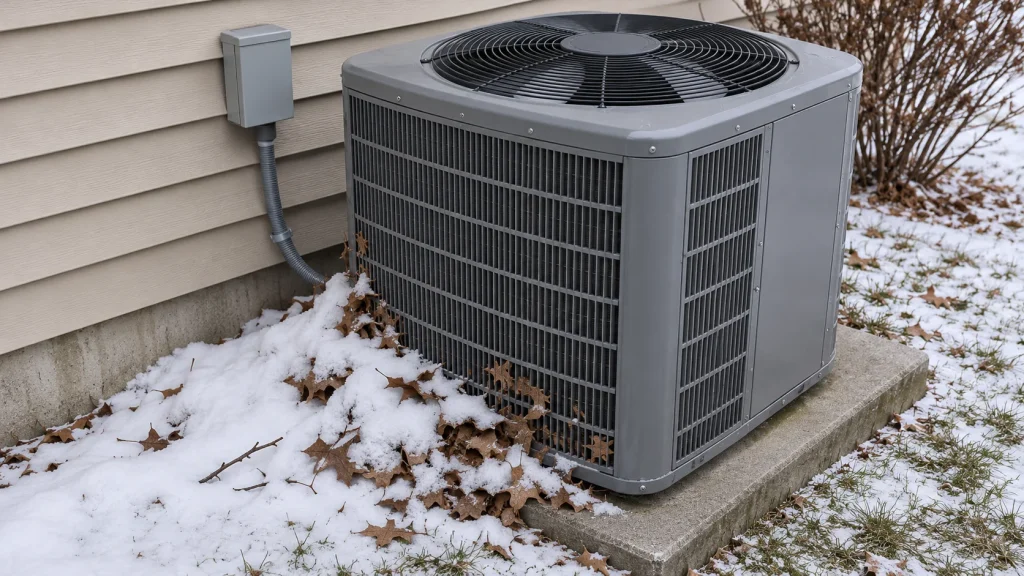
Check whether drifting snow, leaves, or other loose debris have piled up against the sides of the unit. With the system off at the thermostat, clear loose material from the ground around it. Follow your model’s clearance requirements and keep your hands and tools away from the grille and coil.
Use a compact snow shovel to clear snow around the unit.
Leave any snow or ice that is stuck to the cabinet or coil. Scraping can bend the fins or damage the coil.
3. Check for water dripping or pooling around the unit
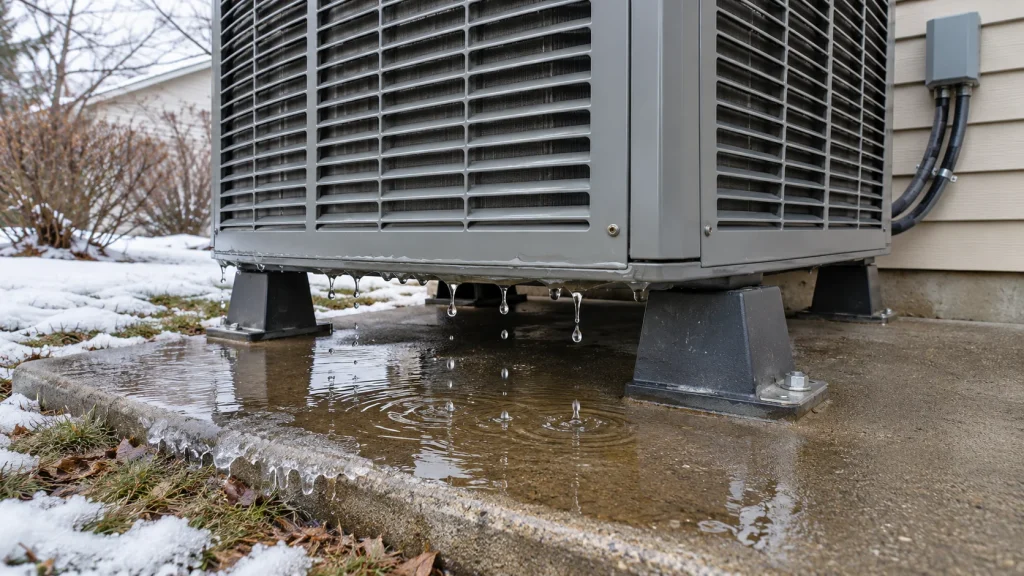
Look for an overflowing gutter, roof runoff, or melting snow dripping onto the unit. Also look at the base from a safe distance. Water from a normal defrost cycle needs somewhere to go. If it collects around the unit and refreezes, it can build up around the base over multiple cycles.
Tell the technician if ice keeps forming in the same spot. That detail can help them distinguish a runoff or drainage problem from a defrost problem.
4. Verify the thermostat is in Heat mode
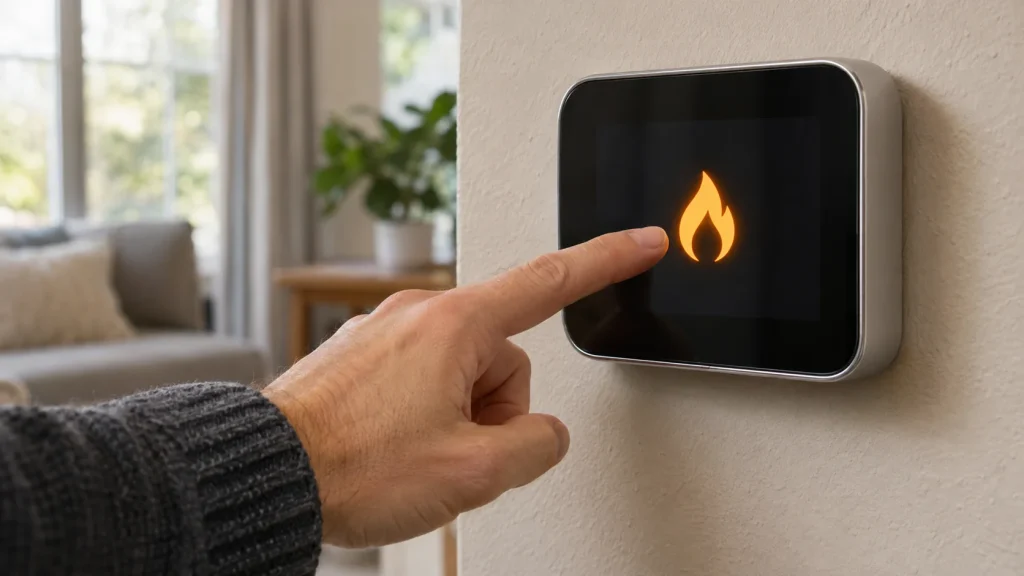
If the unit has only light frost, confirm the thermostat is set to Heat and the set temperature is above the room temperature. A brief AUX Heat indication can be normal during defrost on systems with backup heat. If the house keeps getting colder or the system relies on backup heat much longer than usual, arrange service.
If the display is out entirely, start with our guide to a blank thermostat screen.
5. Check the indoor air filter and return vents
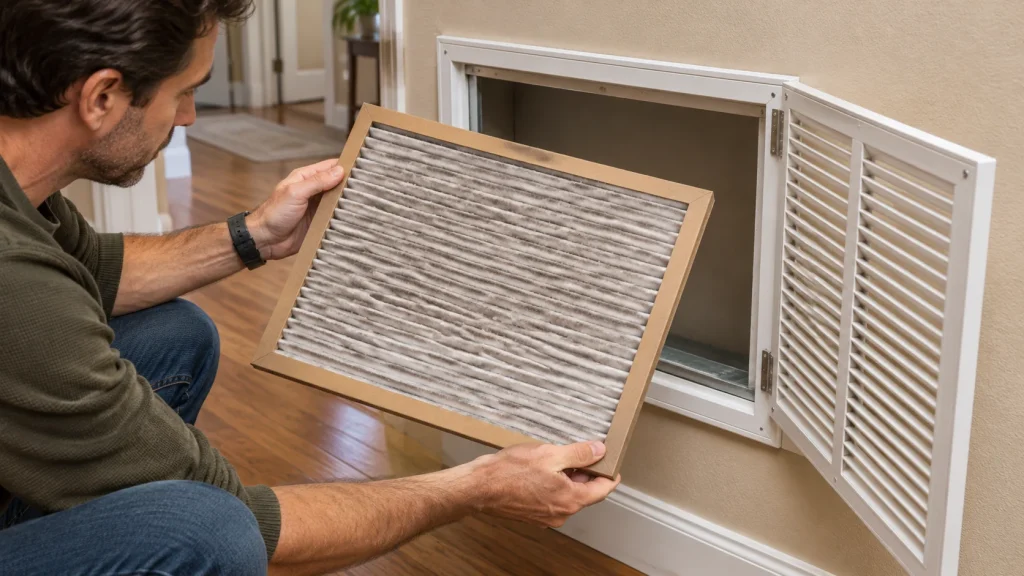
If airflow from the indoor vents feels weak, inspect the accessible filter according to the owner’s manual. Replace a dirty disposable filter with the size and type your system specifies, and make sure furniture or rugs aren’t blocking the return grilles. Good indoor airflow helps the system deliver heat while you assess the outdoor icing. For help choosing a compatible replacement, see our guide to furnace and HVAC filter ratings.
Before ordering, check the size printed on your current filter and confirm the filter type your system calls for. You can shop replacement HVAC air filters by size.
If ice remains on the outdoor coil after defrosting, have the outdoor unit checked even if a new filter improves indoor airflow.
When to Call an HVAC Technician
Call for service if heavy ice remains after defrosting, returns repeatedly, or your home can’t reach the thermostat setting. Turn the heat pump off at the thermostat if ice encases the unit, the fan is jammed or scraping, or the equipment is making a new grinding sound.
Before calling, note where the ice started, whether you saw it clear during defrost, and whether the indoor temperature was falling. These observations give the technician a starting point for checking the defrost controls, outdoor fan, or refrigerant system. Leave the service panels closed.
Frequently Asked Questions
Is it normal for a heat pump to frost over in winter?
Yes. A thin coating of frost can form in heating mode, especially in cold, damp weather. It should clear during a normal defrost cycle. Ice that gets thicker from one cycle to the next is a reason to schedule service.
I found my heat pump frozen outside. Can I pour hot water on it?
Avoid pouring hot water on the unit or using a heat gun, scraper, or ice pick. Water can refreeze, and tools can damage the coil or fan. If the unit is encased in ice, shut it off at the thermostat and arrange service.
Can I use Emergency Heat while I wait for repair?
If your system has a dedicated Emergency Heat setting, check the owner’s manual to confirm that it runs the backup heat independently of the outdoor unit. If it does, you can use that setting temporarily while you wait for service. Electric resistance backup heat typically uses more electricity than normal heat pump operation.
What if I see ice when the heat pump is in cooling mode?
Ice during cooling calls for different troubleshooting. If you see ice on the indoor coil or refrigerant line while running the AC, see our guide to why your AC is freezing up.