
Last updated: September 20, 2026
By Home Repair Genie
Quick Answer
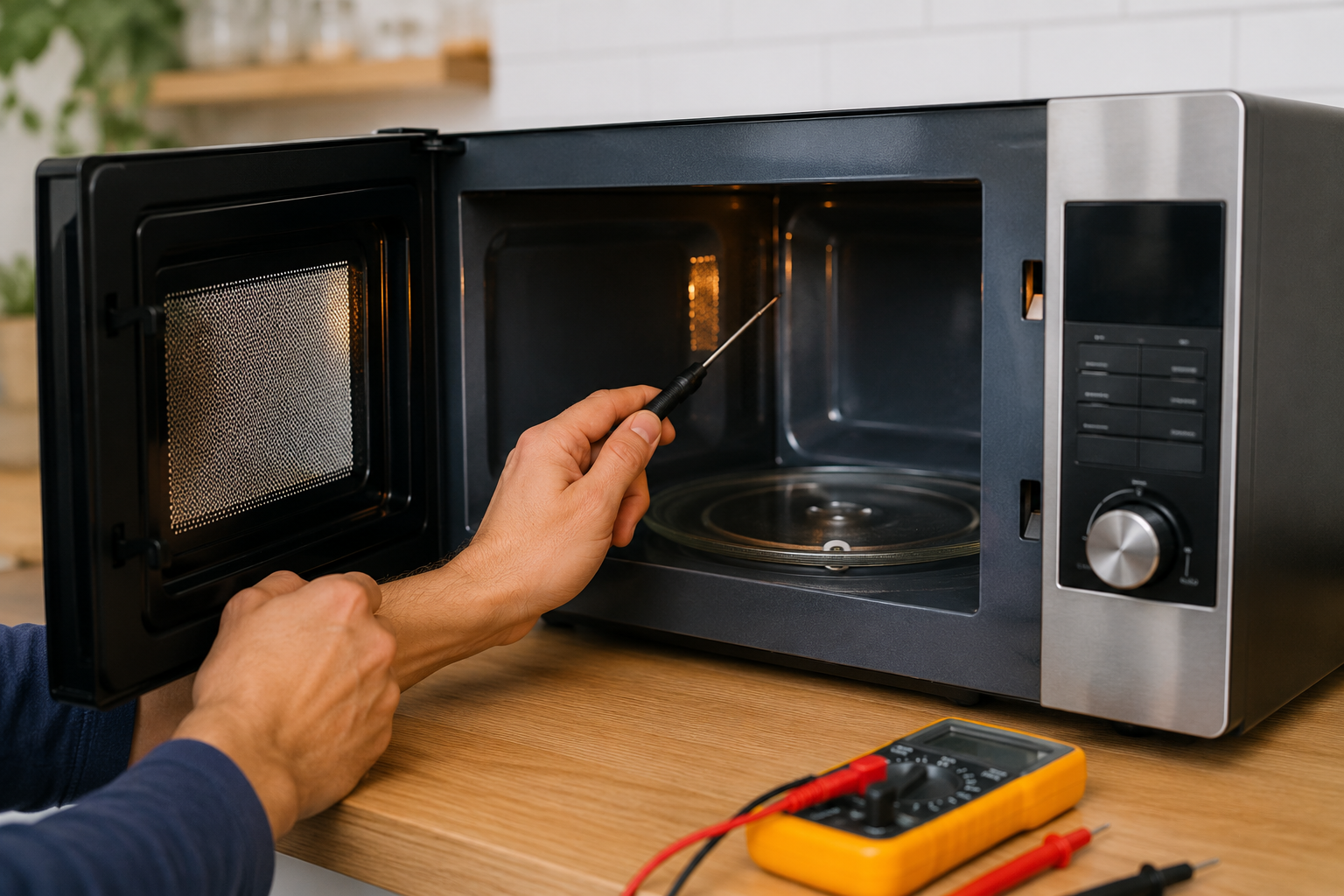
Microwave not heating? The most common causes are incorrect power settings, a faulty door switch, blown fuse, failed diode, or bad magnetron. Start by testing the outlet, checking the door latch, and resetting the microwave before considering internal component repairs.
These troubleshooting steps can often fix a microwave not heating problem without replacing the appliance.
If the outlet powering the microwave is not working properly, read our guide: How to Fix an Outlet That’s Not Working (Step-by-Step Guide)
Why Your Microwave Is Not Heating
A microwave can still run, light up, and spin while failing to produce heat. This usually means the electrical components responsible for generating microwave energy are malfunctioning.
Common causes include:
- Incorrect power settings
- Faulty door switches
- Blown internal fuse
- Failed high-voltage diode
- Bad magnetron
- Control board issues
Step 1: Check the Power Settings
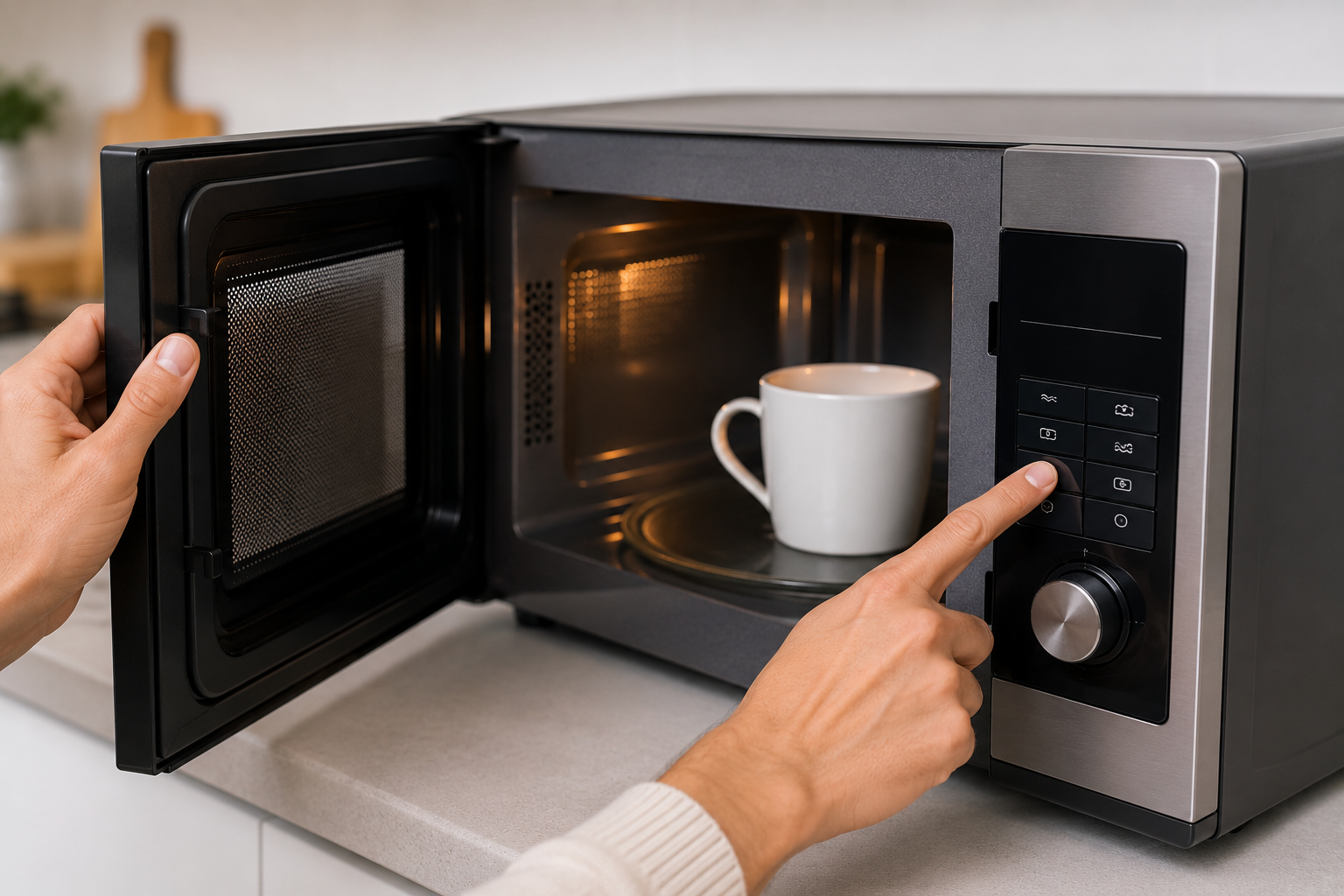
Some microwaves allow reduced power levels for defrosting or reheating.
How to Check
- Cancel the current cycle.
- Set the microwave to full power.
- Heat a cup of water for 1 minute.
- Check whether the water becomes hot.
Low-power settings can make it seem like the microwave has stopped heating.
Step 2: Test the Wall Outlet
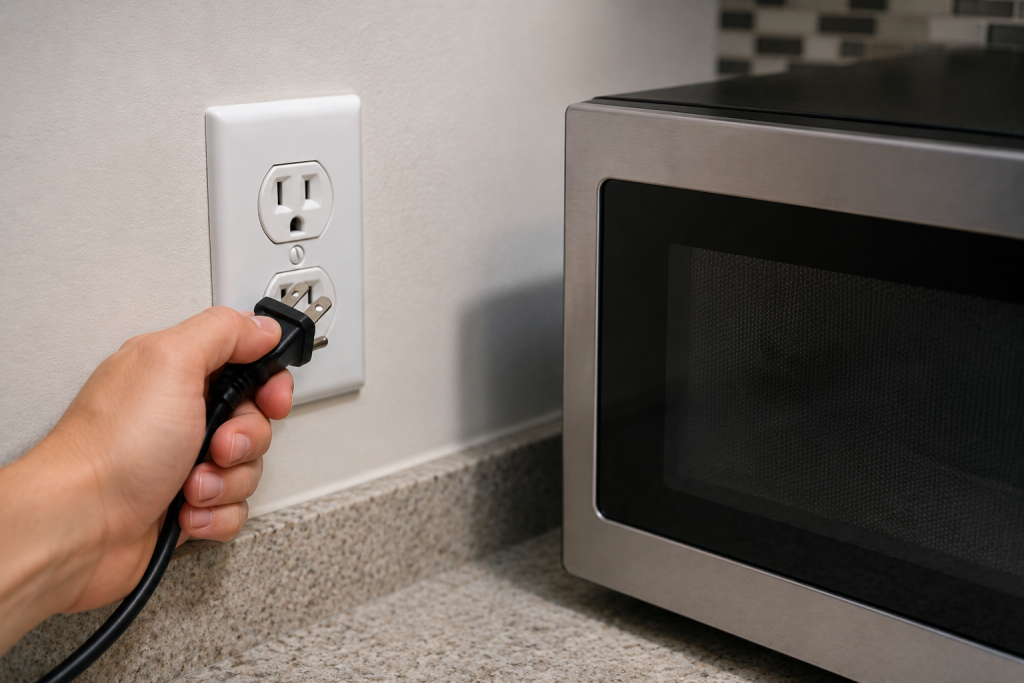
A weak or damaged outlet may prevent the microwave from operating correctly.
What to Look For
- Flickering display
- Random shutdowns
- Tripped breakers
- Loose plugs
Try plugging the microwave into another outlet temporarily.
Internal Link: If the breaker trips repeatedly, read our helpful guide about Breaker Keeps Tripping? 7 Easy Fixes That Actually Work (Step-by-Step Guide)
Step 3: Inspect the Door Latch and Switches
Microwaves have safety switches that prevent heating when the door is not fully closed.
Signs of Door Switch Problems
- Microwave runs but does not heat
- Door feels loose
- Unit stops when the door moves
- Clicking sounds disappear
A damaged latch or switch may stop the heating cycle completely.
A microwave not heating issue is commonly caused by faulty door switches or a loose door latch.
Step 4: Reset the Microwave
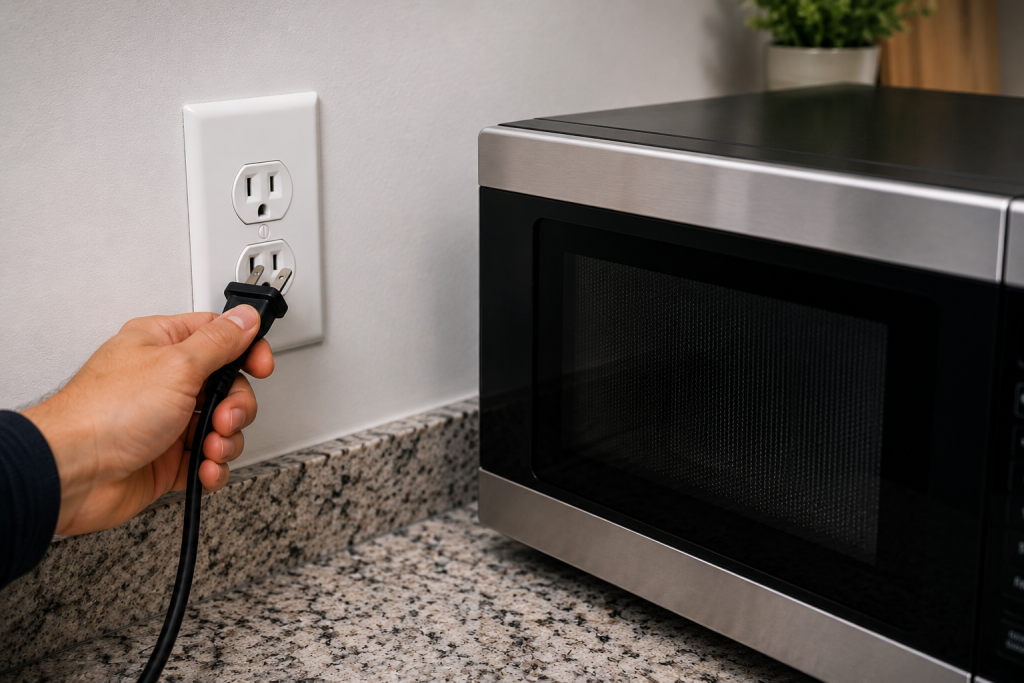
Electronic glitches can sometimes interrupt heating functions.
How to Reset It
- Unplug the microwave.
- Wait 5 minutes.
- Plug it back in.
- Test the microwave again.
A reset may clear temporary control board errors.
Step 5: Check for a Blown Internal Fuse
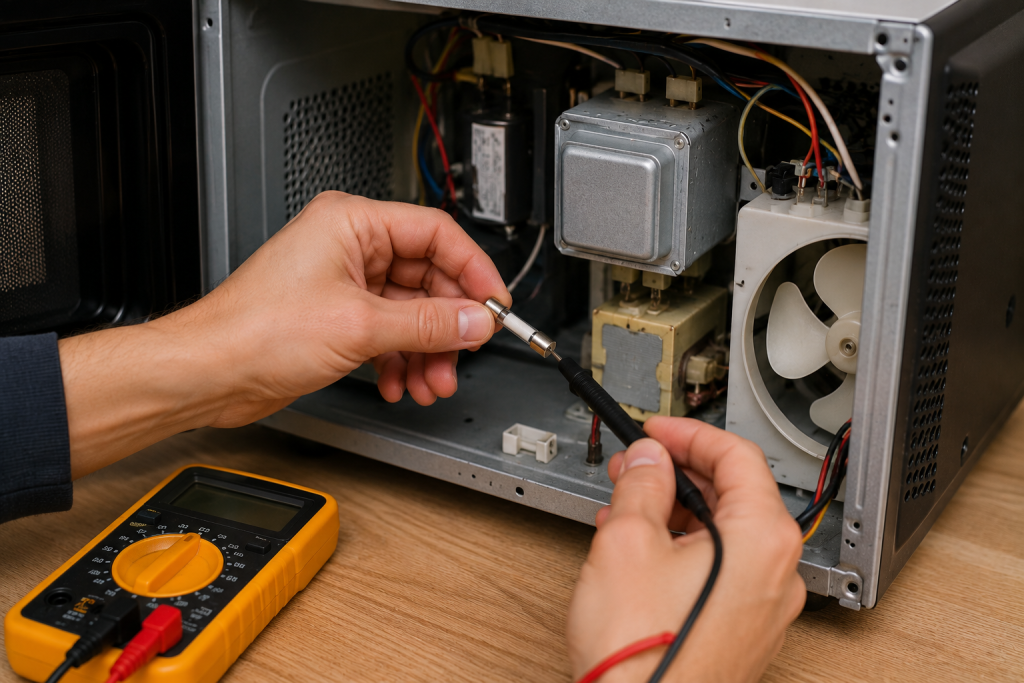
Microwaves contain internal ceramic fuses that protect against electrical surges.
Symptoms of a Blown Fuse
- Microwave suddenly stopped working
- No heating function
- Blank display
- Dead controls
Important: Microwaves contain high-voltage capacitors that can remain dangerous even after unplugging.
Step 6: Inspect the High-Voltage Diode
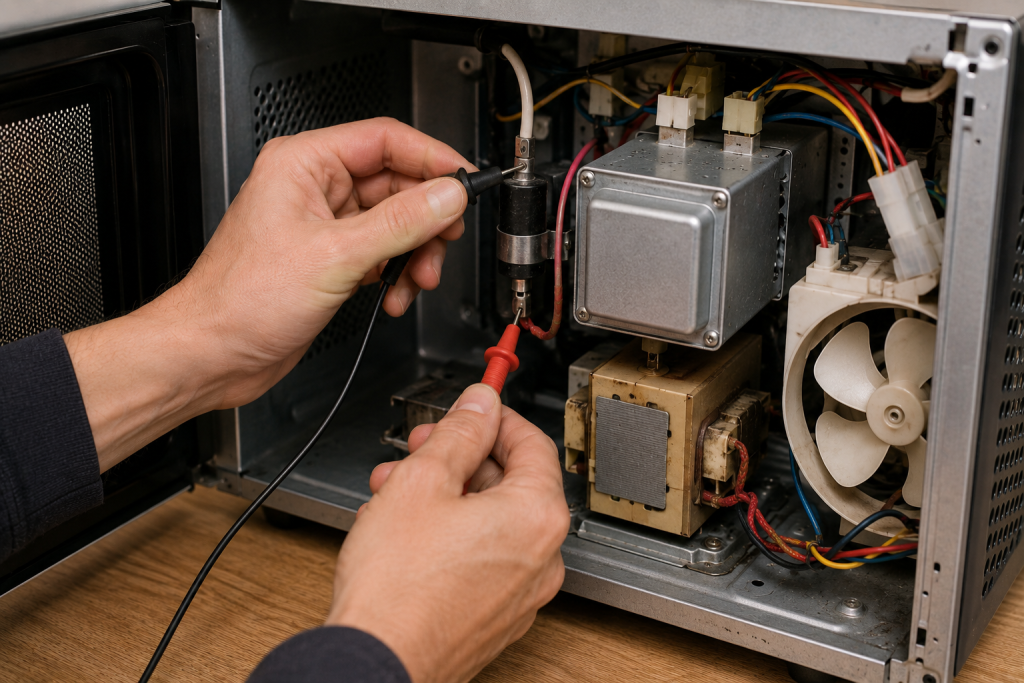
The high-voltage diode helps convert electrical power needed for heating.
Signs of a Failed Diode
- Microwave runs but food stays cold
- Burning smell
- Buzzing noises
- Longer heating times
A failed diode is one of the most common reasons for a microwave not heating. If your microwave not heating problem started after buzzing noises or burning smells, the high-voltage diode may have failed.
Step 7: Consider a Failed Magnetron
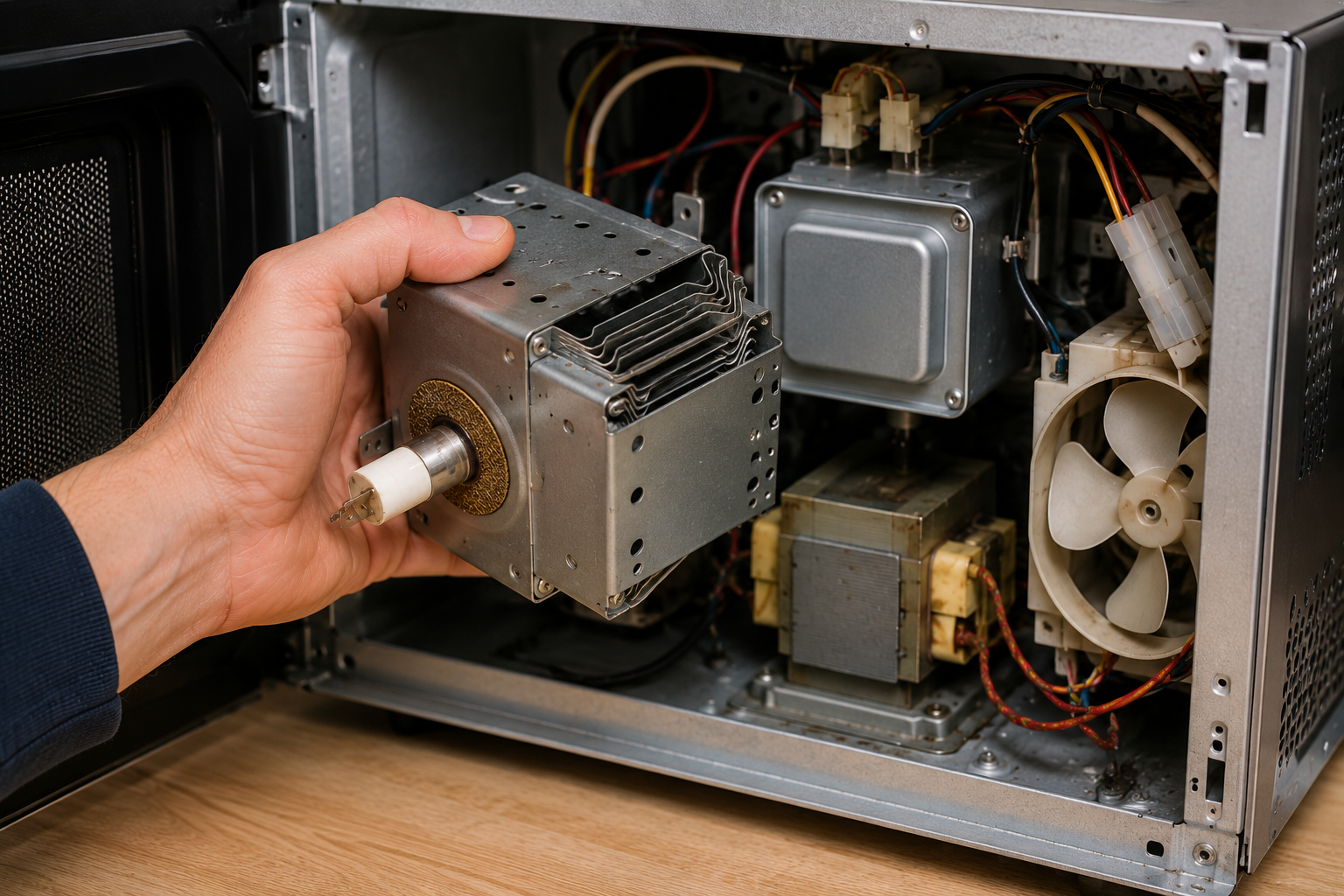
The magnetron is the component that actually generates microwave energy.
Symptoms of Magnetron Failure
- Loud humming noises
- Microwave runs without heating
- Burning odor
- Intermittent heating
Replacing a magnetron can sometimes cost nearly as much as replacing the microwave itself.
If another kitchen appliance like your refrigerator is acting up, read: Refrigerator Not Cooling? 7 Easy Fixes That Actually Work.
When to Call a Professional
Contact an appliance repair technician if:
- The microwave sparks internally
- You smell burning odors
- The unit trips breakers repeatedly
- Internal components need replacement
- The microwave still does not heat after basic troubleshooting
Microwave repairs involving high-voltage parts should be handled carefully.
Tips to Prevent Microwave Heating Problems
To help extend microwave life:
- Never run the microwave empty
- Keep the interior clean
- Avoid slamming the door
- Use microwave-safe containers
- Keep vents free from dust
Routine care can reduce strain on internal heating components.
FAQ
Why does my microwave run but not heat?
This usually points to a bad door switch, diode, capacitor, or magnetron.
Is it worth repairing a microwave that is not heating?
Small repairs may be worthwhile, but major internal component failures can make replacement more cost-effective.
Can a bad outlet cause microwave heating issues?
Yes. Weak electrical connections or overloaded circuits can interfere with microwave operation.
Is it dangerous to repair a microwave yourself?
Microwaves contain high-voltage capacitors that can store dangerous electricity even when unplugged.
Looking for help with another appliance problem? Browse our complete collection of appliance repair guides and error-code fixes.
For additional microwave safety and repair information, see Consumer Reports microwave maintenance guide