
Last updated: October 11, 2026
By Home Repair Genie
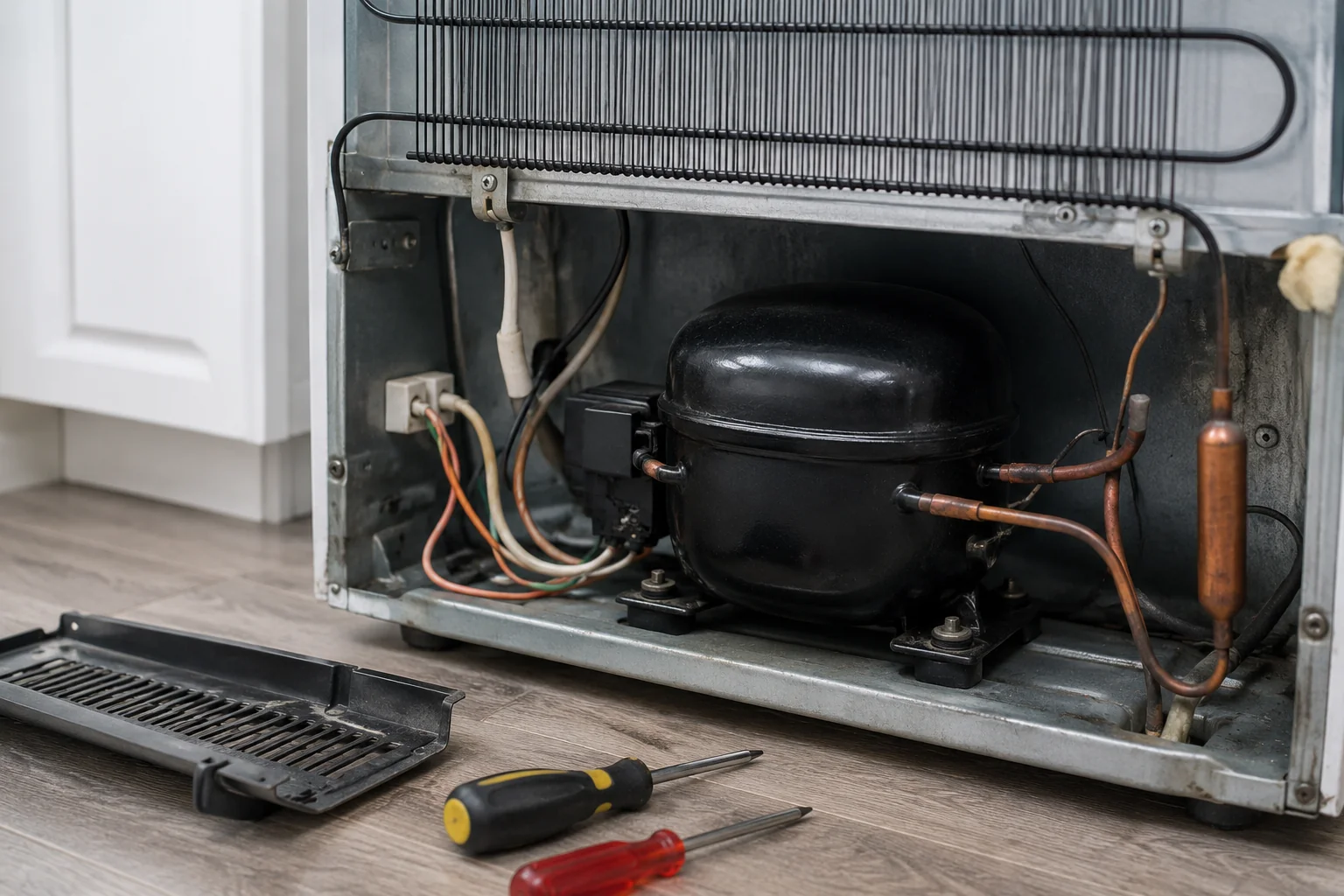
A refrigerator compressor running but not cooling is usually caused by restricted airflow, dirty condenser coils, a failed evaporator fan, a faulty start relay, low refrigerant, or a sealed system failure. Before assuming the compressor has failed, work through these troubleshooting steps, as many causes can be fixed without replacing the refrigerator.
Quick Answer
If you have a refrigerator compressor running but not cooling, start by checking these common issues before assuming the compressor has failed.:
- Verify the temperature settings.
- Clean dirty condenser coils.
- Make sure the condenser fan is running.
- Check that the evaporator fan is operating.
- Look for heavy frost on the evaporator cover.
- Inspect the door gaskets for air leaks.
- Test the compressor start relay.
- Listen for unusual compressor noises.
- Consider a sealed system or refrigerant problem if everything else appears normal.
If the compressor runs continuously but never cools, a sealed system issue may require professional repair.
If your refrigerator has stopped cooling entirely, you may also want to read our guide on Why Your Refrigerator Is Not Cooling.
How a Refrigerator Compressor Cools the Refrigerator
The compressor is the heart of the refrigeration system. It compresses refrigerant and circulates it through the condenser and evaporator coils to remove heat from inside the refrigerator.
If the compressor is running but cooling does not occur, either:
- Heat is not being removed properly.
- Refrigerant is not circulating correctly.
- Cold air is not being distributed inside the refrigerator.
Understanding which system has failed makes troubleshooting much easier.
Common Symptoms
If you’re experiencing any of the following, this guide applies:
- Compressor runs constantly
- Refrigerator warm inside
- Freezer also warm
- Food spoiling
- Little or no cold air from vents
- Compressor feels hot
- Refrigerator never reaches the set temperature
What Causes a Refrigerator Compressor to Run Without Cooling?
The most common causes include:
- Dirty condenser coils
- Failed condenser fan motor
- Failed evaporator fan motor
- Frost buildup from a defrost failure
- Bad compressor start relay
- Refrigerant leak
- Weak compressor
- Sealed system restriction
Fortunately, the first several problems are often inexpensive to diagnose and repair.
Step 1: Verify the Temperature Settings
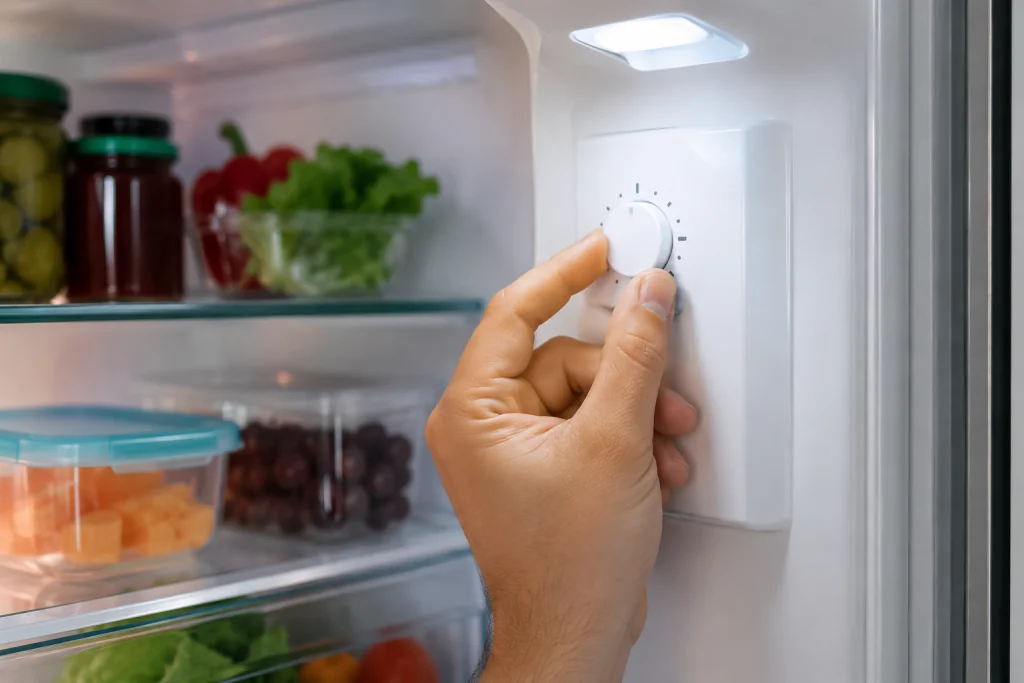
Sometimes the controls are accidentally changed.
Check that:
- Refrigerator is set between 36°F and 38°F
- Freezer is set around 0°F
- Cooling mode has not been disabled
As an Amazon Associate I earn from qualifying purchases
A refrigerator/freezer thermometer can help confirm the actual temperatures after you’ve given the appliance time to cool.
Wait several hours after making adjustments before evaluating performance.
Step 2: Clean the Condenser Coils
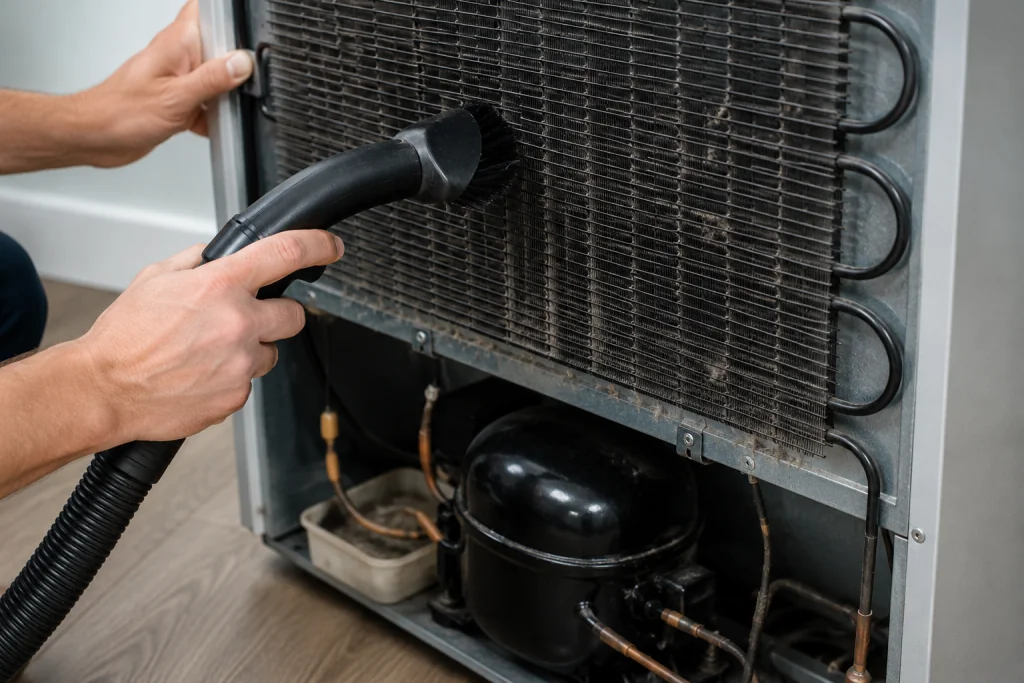
Dirty condenser coils are one of the most common causes of poor cooling.
Dust and pet hair prevent heat from leaving the system, forcing the compressor to run almost constantly.
How to clean them
- Unplug the refrigerator.
- Locate the condenser coils.
- Vacuum loose debris.
- Use a refrigerator coil cleaning brush to loosen dust and pet hair, then vacuum the debris.
- Vacuum again.
- Restore power.
Many refrigerators recover normal cooling within several hours after cleaning.
Step 3: Check the Condenser Fan
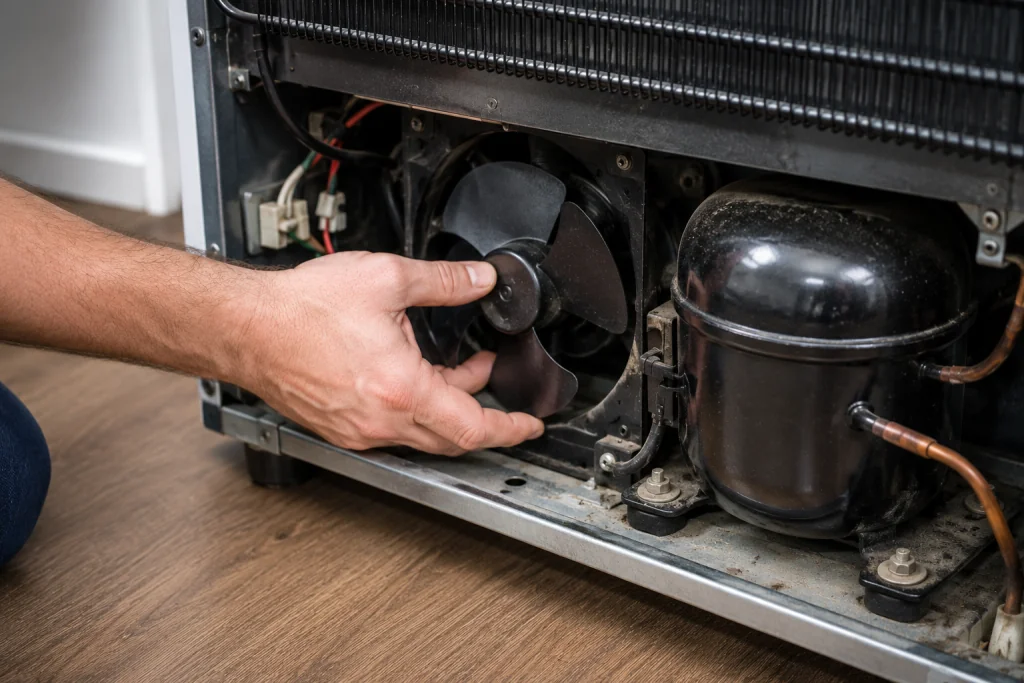
Most refrigerators use a fan next to the compressor.
Its job is to remove heat from the condenser coils.
A failed fan allows the compressor to overheat while reducing cooling efficiency.
Signs of a bad condenser fan include:
- Fan not spinning
- Loud rattling
- Grinding noises
- Compressor extremely hot
If the fan does not operate while the compressor is running, it may need replacement. If the fan is operating but you hear unusual sounds, see our guide on Refrigerator Making Loud Noise.
Step 4: Verify the Evaporator Fan Is Running
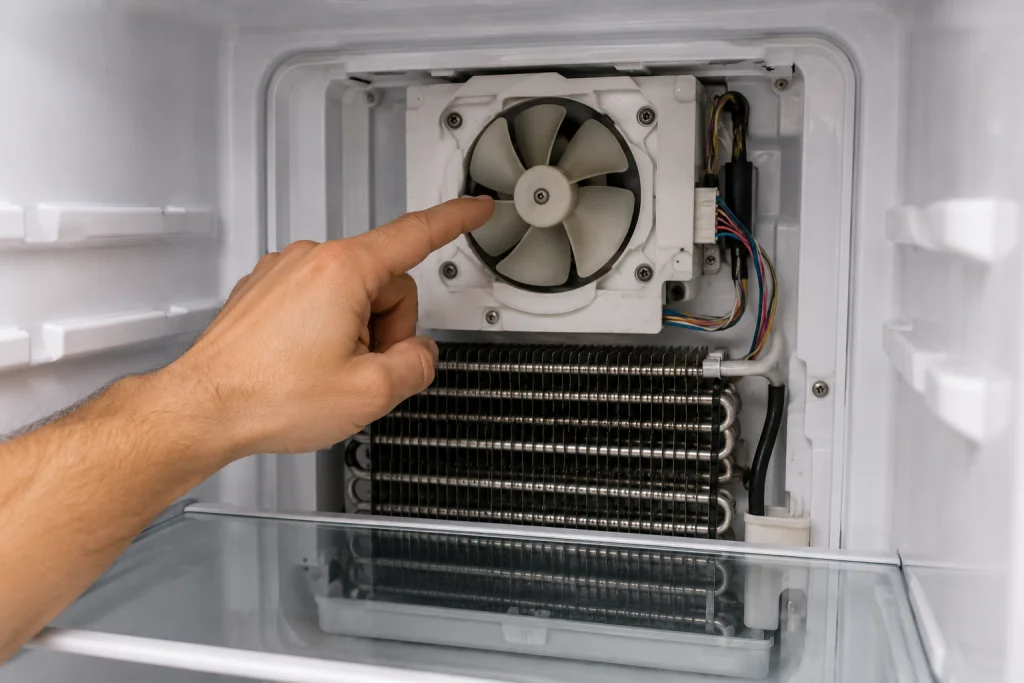
The evaporator fan circulates cold air throughout the refrigerator.
If it stops:
- Freezer may become only slightly cool
- Refrigerator section becomes warm
- Compressor continues running
Open the freezer door.
On many models, holding the door switch closed should cause the evaporator fan to start.
If it remains silent, the fan motor may have failed.
If your refrigerator has cooling problems caused by frost buildup, you may also find our guide on Refrigerator Freezer Iced Up helpful.
Step 5: Look for Frost Buildup
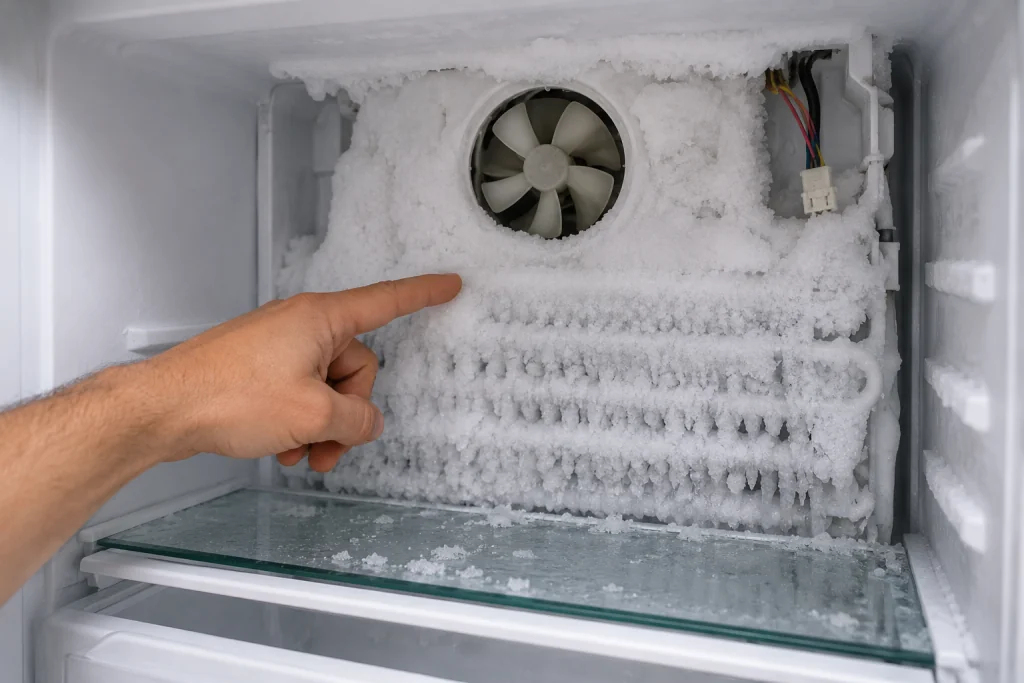
Remove the inside rear freezer panel if you’re comfortable doing so.
Heavy ice covering the evaporator coils usually indicates a defrost system problem.
Possible failed components include:
- Defrost heater
- Defrost thermostat
- Defrost sensor
- Defrost control board
A completely frozen evaporator prevents cold air from circulating.
Step 6: Inspect the Door Gaskets
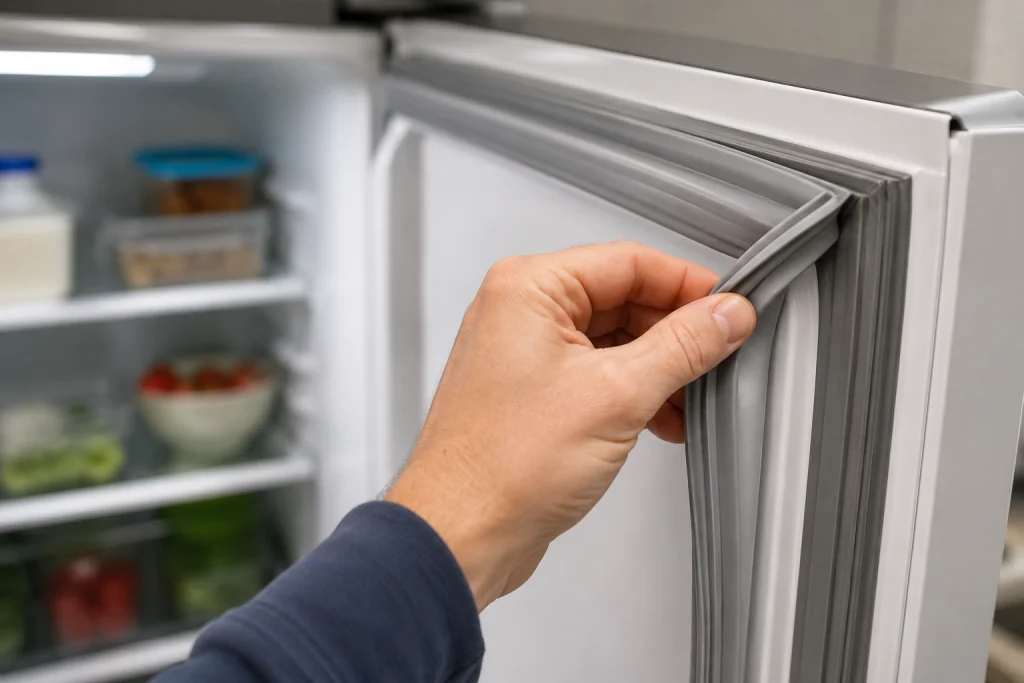
Warm air entering through damaged door seals forces the compressor to run continuously.
Check for:
- Torn gaskets
- Food preventing a tight seal
- Dirt buildup
- Doors that don’t close completely
Clean dirty seals with warm water and mild soap.
Replace damaged gaskets if necessary.
Step 7: Test the Compressor Start Relay
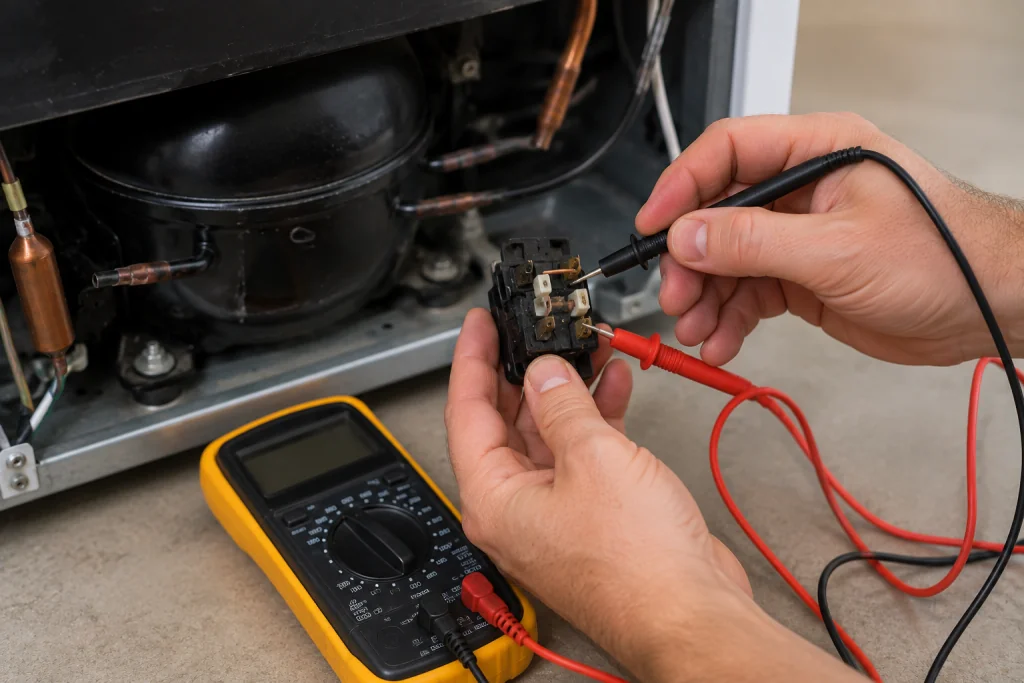
A faulty start relay is more likely when you hear a click or brief hum every few minutes but the compressor does not start and keep running. If you have confirmed that the compressor runs steadily, move to the next step; a start relay is less likely to explain the lack of cooling.
To check the relay:
- Unplug the refrigerator. Never use a multimeter’s resistance or continuity setting on a powered appliance.
- Find the refrigerator’s model number and consult its parts diagram or service instructions to identify the start device. Its location and test procedure vary by model.
- If you are comfortable accessing it, remove the compressor compartment cover and inspect the start device for visible damage, such as melted plastic or burned terminals.
- Follow the model-specific test instructions when using a multimeter. Do not assume that every relay should show continuity between the same terminals or that one reading applies to all designs.
- If the test indicates a faulty start device, order a replacement that matches your refrigerator’s exact model number.
A digital multimeter can help with the model-specific electrical checks. If you cannot find the correct test procedure, or you are unsure which component you are testing, have an appliance technician diagnose it.
Step 8: Listen to the Compressor
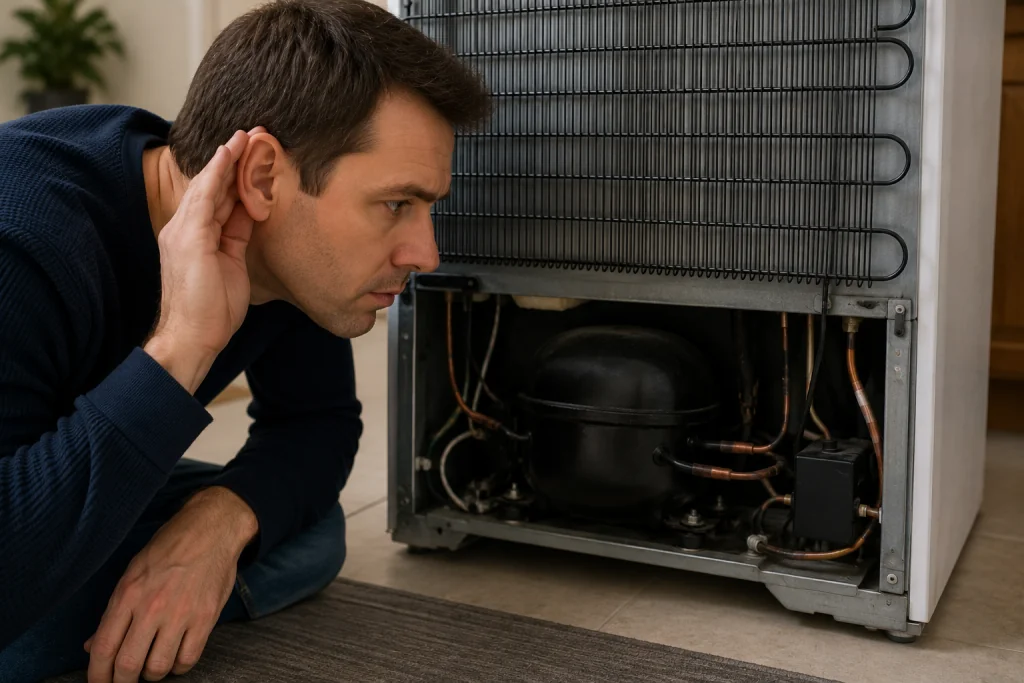
A healthy compressor produces a smooth humming sound.
Problem noises include:
- Loud clicking
- Buzzing
- Knocking
- Repeated starting attempts
These symptoms may indicate:
- Internal compressor damage
- Electrical problems
- Locked compressor
Step 9: Consider a Sealed System Problem
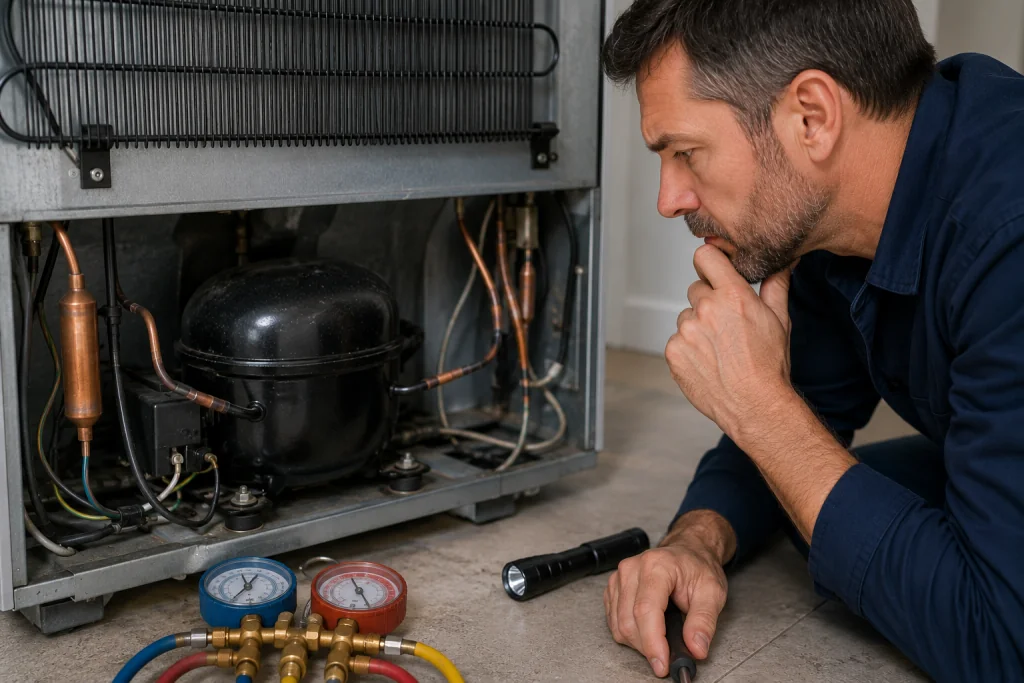
If:
- Compressor runs continuously
- Fans work normally
- Condenser coils are clean
- Frost pattern is incomplete or absent
- Refrigerator never cools
the refrigerator may have:
- Refrigerant leak
- Weak compressor
- Restricted capillary tube
- Failed internal valves
These repairs require specialized equipment and EPA-certified refrigerant handling.
If your refrigerator compressor running but not cooling problem persists after completing all of the checks above, the issue may be within the sealed refrigeration system.
Frost Pattern Guide
| Frost Pattern | Most Likely Cause |
|---|---|
| Even frost across entire evaporator | Normal operation |
| Frost only near refrigerant entry | Low refrigerant |
| Small patch of frost | Weak compressor |
| Entire evaporator covered in ice | Defrost failure |
| No frost anywhere | Compressor or sealed system problem |
When to Call a Professional
Professional service is recommended when:
- Compressor runs continuously for over 24 hours after cleaning the coils
- Compressor becomes extremely hot
- Compressor repeatedly clicks
- Refrigerant leak is suspected
- Frost pattern indicates a sealed system issue
- Compressor has stopped pumping refrigerant
A technician can measure system pressures and confirm whether repair or replacement is the better option.
Maintenance Tips
To help prevent cooling problems:
- Clean condenser coils every 6 to 12 months.
- Keep vents inside the refrigerator clear.
- Avoid overloading shelves.
- Replace damaged door seals promptly.
- Leave space behind the refrigerator for proper airflow.
- Vacuum underneath the refrigerator regularly.
Routine maintenance helps extend compressor life and improve energy efficiency.
Routine maintenance also helps prevent issues like ice makers that stop working after replacing the water filter.
Frequently Asked Questions for Refrigerator Compressor Running but Not Cooling
Why is my refrigerator compressor running all the time but not cooling?
A refrigerator compressor running but not cooling condition is most commonly caused by dirty condenser coils, failed fan motors, frost buildup, a faulty start relay, or a sealed system problem.
Can dirty condenser coils stop a refrigerator from cooling?
Yes. Heavy dust buildup prevents heat from leaving the refrigeration system, causing poor cooling and continuous compressor operation.
How do I know if my compressor is bad?
Signs include continuous running without cooling, overheating, clicking noises, or an incomplete frost pattern on the evaporator coils.
Is it worth replacing a refrigerator compressor?
It depends on the refrigerator’s age, warranty status, and repair cost. Compressor replacement is often expensive because it requires sealed system work.
Can a refrigerator compressor run without pumping refrigerant?
Yes. Internal compressor valves can wear out, allowing the motor to run while producing little or no cooling.
Experience-Based Tip
Many homeowners assume the compressor has failed as soon as they hear it running without any cooling. In practice, dirty condenser coils, failed fan motors, or a defrost system problem are much more common and significantly less expensive to repair. Working through the basic checks before concluding the compressor is bad can save hundreds of dollars in unnecessary repairs.
Looking for help with another appliance problem? Browse our complete collection of appliance repair guides and error-code fixes.
Learn More
For additional refrigerator troubleshooting information and food safety recommendations, see the U.S. Department of Agriculture’s refrigerator food safety guidance.
You may also find these Home Repair Genie guides helpful: