
Last updated: October 10, 2026
By Home Repair Genie
As an Amazon Associate I earn from qualifying purchases.
Quick Answer
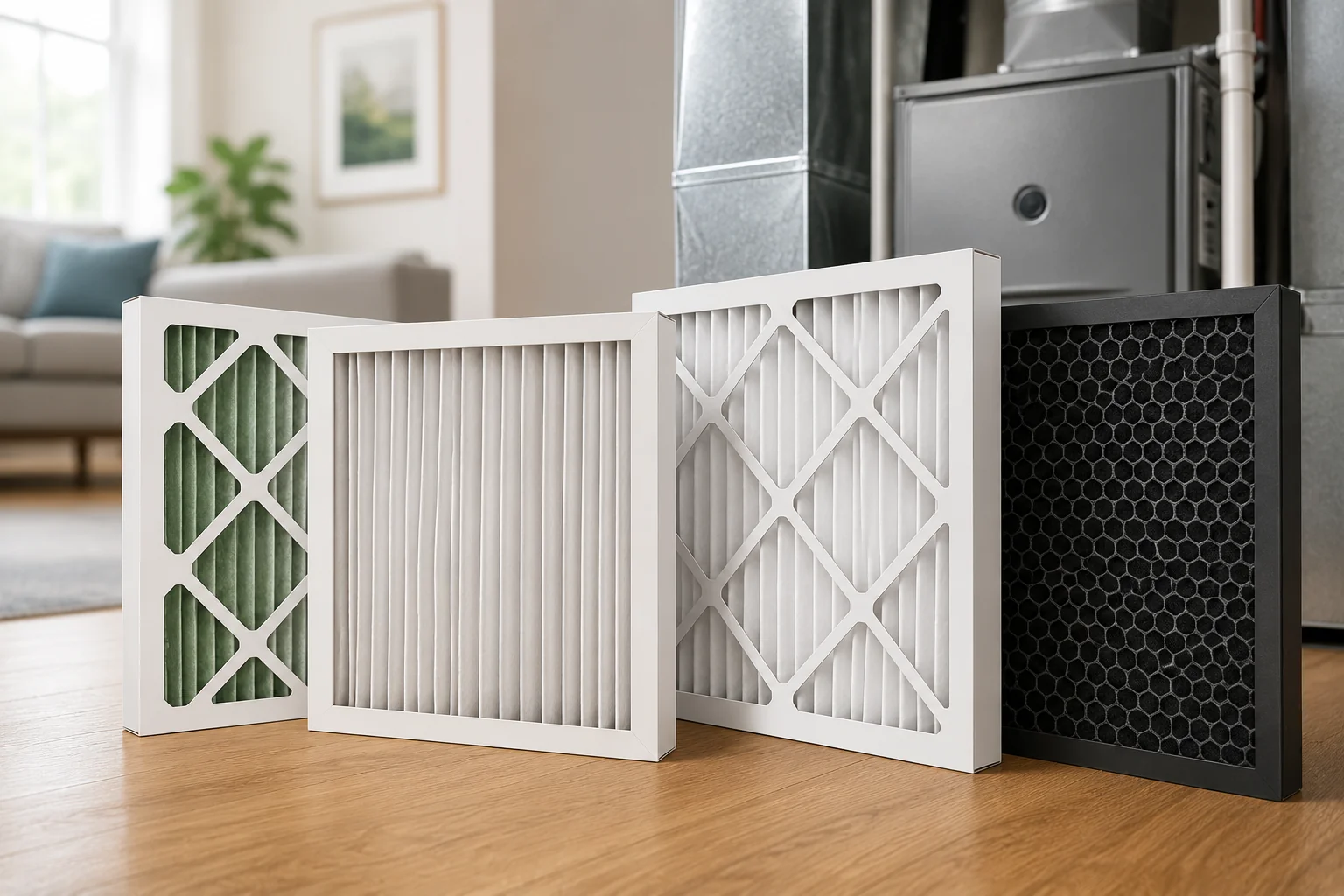
Choosing the best furnace filters depends on your HVAC system, indoor air quality needs, allergies, pets, and desired balance between filtration and airflow. For most homes, a MERV 11 furnace filter offers the best balance of air quality, airflow, and HVAC protection. Choose MERV 8 if you have no allergy concerns and want maximum airflow. Choose MERV 13 if someone in your home has allergies, asthma, or other respiratory conditions—but only if your HVAC system is designed to handle the additional airflow resistance.
Restricted airflow can lower vent temperatures and contribute to AC vents sweating during humid weather.
Best Furnace Filters: MERV 8 vs. MERV 11 vs. MERV 13 at a Glance
| Feature | MERV 8 | MERV 11 | MERV 13 |
|---|---|---|---|
| Dust | Excellent | Excellent | Excellent |
| Pollen | Good | Excellent | Excellent |
| Mold Spores | Good | Excellent | Excellent |
| Pet Dander | Fair | Very Good | Excellent |
| Smoke Particles | Poor | Fair | Good |
| Bacteria | No | Limited | Good |
| Airflow Restriction | Low | Moderate | Higher |
| Best For | Most homes | Homes with pets or allergies | Allergy sufferers and higher indoor air quality |
What Does a MERV Rating Mean?
MERV stands for Minimum Efficiency Reporting Value. It measures how effectively an air filter captures airborne particles.
The higher the MERV rating, the smaller the particles the filter can trap. However, higher-rated filters also restrict airflow more than lower-rated filters.
Most residential HVAC systems are designed for filters between MERV 8 and MERV 13.
Prepare your home for winter with our guide Fall Home Maintenance Checklist: 25 Tasks Before Winter
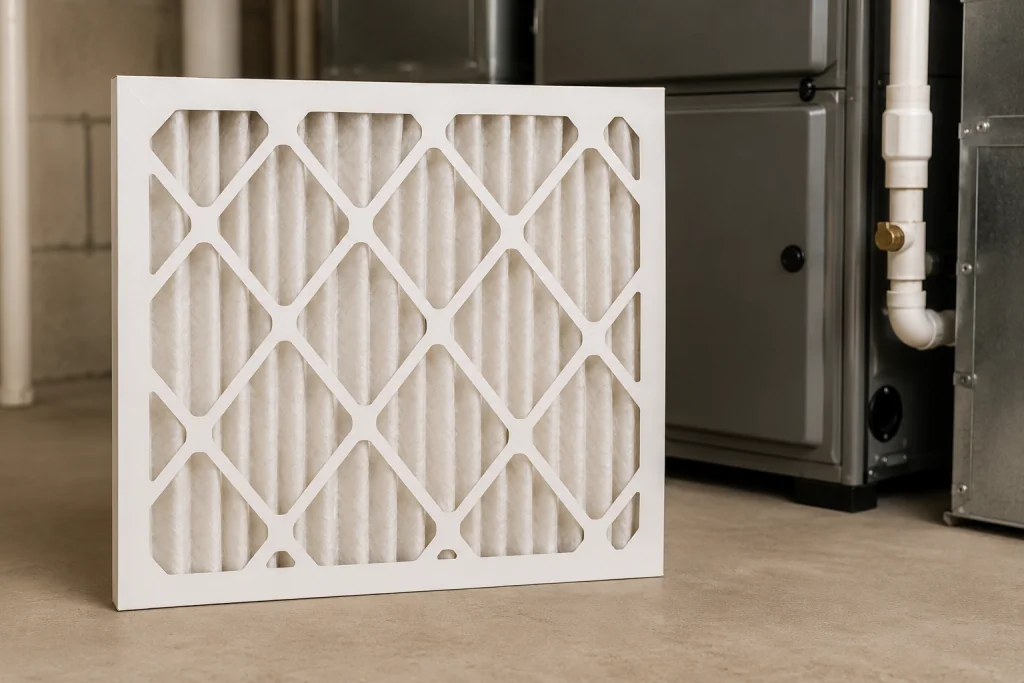
MERV 8 Furnace Filters
Pros
- Excellent airflow
- Affordable
- Protects HVAC equipment well
- Widely available
Cons
- Doesn’t capture many fine particles
- Less effective for allergies
- Limited smoke filtration
Best For
A MERV 8 filter is ideal if:
- No one in your home has allergies
- You primarily want to protect your furnace and air conditioner
- You want the least airflow restriction
If your HVAC system already struggles with airflow, MERV 8 is often the safest option.
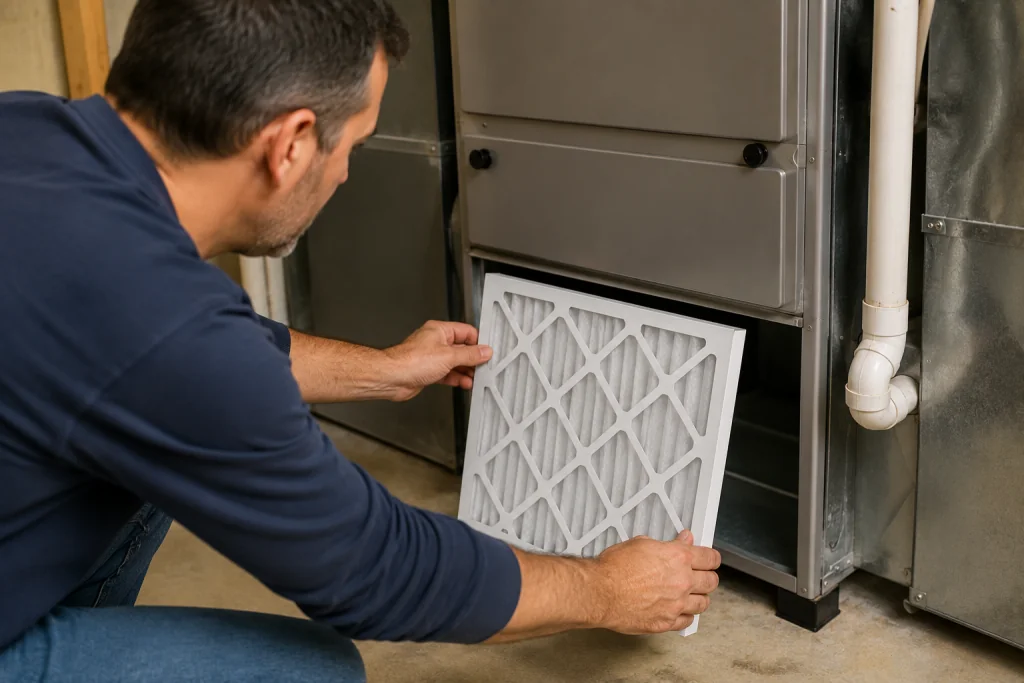
MERV 11 Furnace Filters
Pros
- Better filtration than MERV 8
- Captures more pollen and pet dander
- Good balance between filtration and airflow
- Suitable for most HVAC systems
Cons
- Costs slightly more
- Slightly greater airflow resistance
Best For
MERV 11 is an excellent choice if you:
- Have pets
- Experience seasonal allergies
- Want cleaner indoor air
- Want strong HVAC performance without excessive airflow restriction
For many homeowners, MERV 11 is the sweet spot.
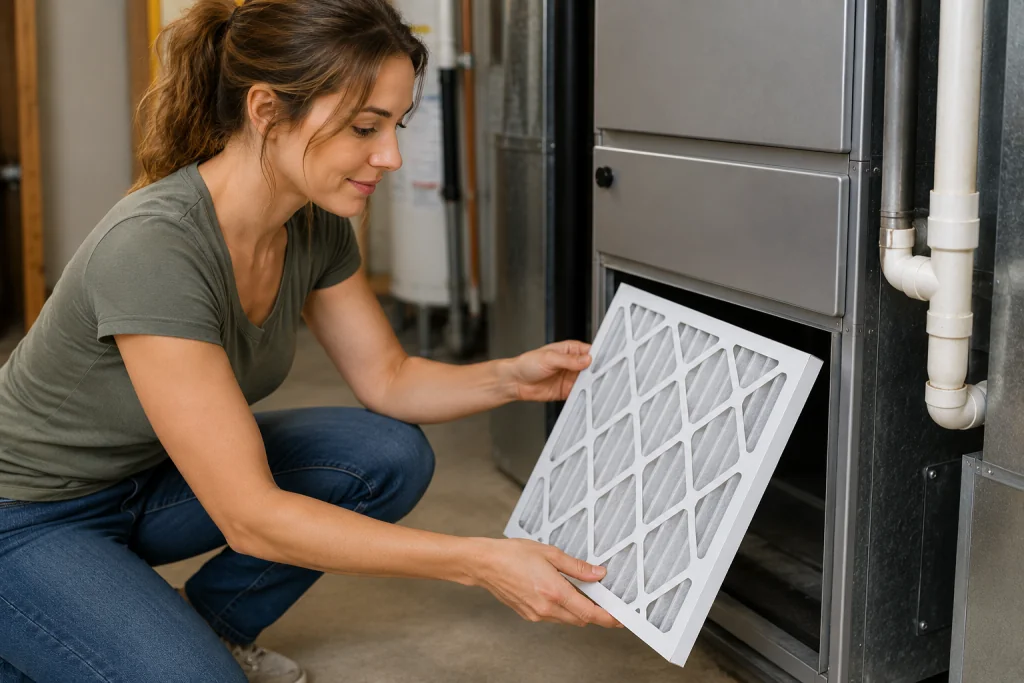
MERV 13 Furnace Filters
Pros
- Excellent filtration
- Removes many bacteria-sized particles
- Better smoke filtration
- Ideal for allergy and asthma sufferers
Cons
- Higher airflow resistance
- More expensive
- Not every HVAC system can support MERV 13
Best Furnace Filters For
Choose MERV 13 if:
- Someone in your household has asthma
- You have severe allergies
- You live in an area with wildfire smoke or poor air quality
- Your HVAC manufacturer approves MERV 13 filters
Before upgrading, check your owner’s manual or HVAC manufacturer’s recommendations.
Particle Size Comparison
Here’s how each filter performs against common airborne contaminants.
| Particle | MERV 8 | MERV 11 | MERV 13 |
|---|---|---|---|
| Dust | ✔ | ✔ | ✔ |
| Lint | ✔ | ✔ | ✔ |
| Pollen | ✔ | ✔✔ | ✔✔ |
| Mold Spores | ✔ | ✔✔ | ✔✔ |
| Pet Dander | ◐ | ✔ | ✔✔ |
| Smoke | ✖ | ◐ | ✔ |
| Fine Dust | ✖ | ✔ | ✔✔ |
| Some Bacteria | ✖ | ✖ | ✔ |
Will a Higher MERV Rating Damage Your HVAC System?
Not necessarily.
The concern isn’t the filter itself—it’s whether your HVAC system can move enough air through it.
A filter that’s too restrictive may:
- Reduce airflow
- Increase energy consumption
- Cause longer heating and cooling cycles
- Increase wear on the blower motor
Most modern residential systems can handle MERV 11 without issue. MERV 13 may require confirmation from your HVAC manufacturer.
How Often Should You Replace a Furnace Filter?
Replacement depends on your home and filter type.
| Home Situation | Replacement Interval |
|---|---|
| Single occupant | Every 90 days |
| Family of four | Every 60–90 days |
| Pets | Every 30–60 days |
| Allergies | Every 30–45 days |
| Heavy HVAC use | Check monthly |
Even high-quality filters become less effective as they fill with dust.
For more maintenance advice, see our guide on 5 Best HVAC Air Filters for Cleaner Air and Better HVAC Performance.
Which MERV Rating Is Best?
MERV 8
Best for:
- Budget-conscious homeowners
- Maximum airflow
- Basic HVAC protection
MERV 11
Best for:
- Most households
- Pet owners
- Seasonal allergies
- Balanced performance
MERV 13
Best for:
- Allergy sufferers
- Asthma
- Better indoor air quality
- Homes with approved HVAC systems
How to Choose the Right Furnace Filter
Step 1: Check Your HVAC Manual
Always verify the maximum recommended MERV rating for your system.
Step 2: Consider Indoor Air Quality
If allergies or asthma are concerns, consider MERV 11 or MERV 13.
Step 3: Think About Pets
Homes with dogs or cats benefit from higher filtration.
Step 4: Replace Filters Regularly
A clean MERV 8 filter usually performs better than a clogged MERV 13 filter.
Looking for help with another heating or cooling problem? Browse our complete collection of HVAC repair and troubleshooting guides.
Our Recommendation
For the average homeowner, MERV 11 is the best overall furnace filter. It provides noticeably better filtration than MERV 8 while maintaining good airflow in most residential HVAC systems.
Only move to MERV 13 if your HVAC system supports it and you have a specific need for enhanced air filtration.
If you’re troubleshooting poor airflow or uneven heating, you may also find these guides helpful:
- Furnace Blowing Cold Air? 7 Easy Fixes That Actually Work (Step-by-Step Guide)
- Furnace Blower Runs Constantly? 7 Easy Fixes That Actually Work (Step-by-Step Guide)
- Thermostat Blank Screen: 9 Proven Fixes to Restore Your Thermostat
For additional guidance on choosing air filters, the U.S. Environmental Protection Agency provides helpful information about indoor air quality and filtration.
Frequently Asked Questions
Is MERV 13 too restrictive for most homes?
Not necessarily. Many newer HVAC systems can handle MERV 13 filters, but older or smaller systems may experience reduced airflow. Always follow the manufacturer’s recommendations.
Is MERV 11 better than MERV 8?
Yes. MERV 11 captures more pollen, pet dander, and fine dust while still maintaining acceptable airflow in most residential HVAC systems.
Do higher MERV filters last longer?
No. Replacement intervals are similar regardless of MERV rating. Homes with pets, allergies, or heavy HVAC use often need more frequent filter changes.
Can I use a MERV 13 filter in any furnace?
No. Always verify compatibility with your furnace or air handler before upgrading to a higher MERV rating.
Will a better furnace filter lower my energy bill?
A clean filter helps your HVAC system operate efficiently. However, an overly restrictive filter in a system not designed for it may increase energy use.
Which best furnace filters are best for pet owners?
MERV 11 is usually the best choice for homes with pets because it captures significantly more pet dander while maintaining good airflow. MERV 13 may be worthwhile for households with severe allergies if the HVAC system supports it.