
Last updated: November 15, 2026
Quick Answer
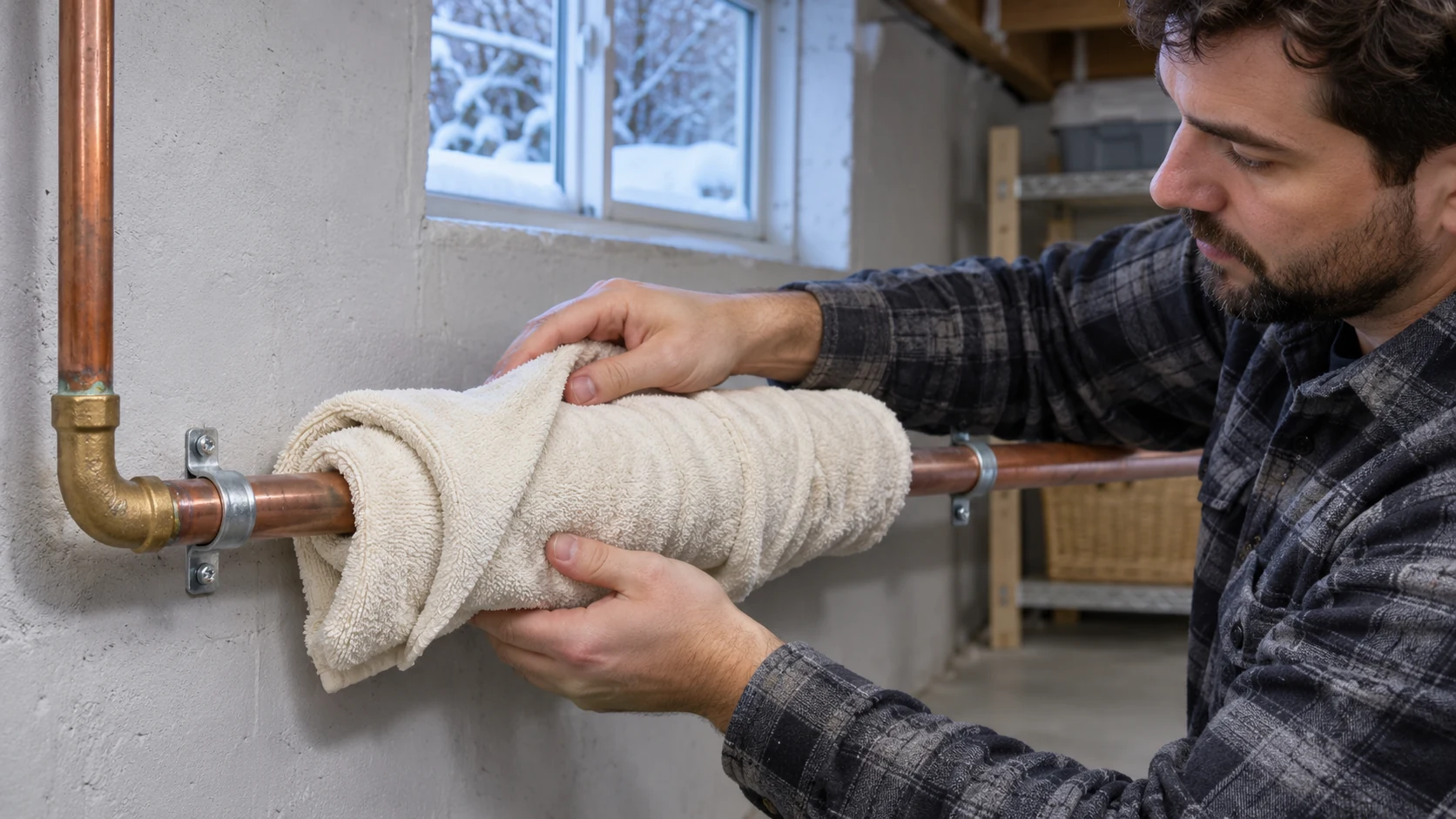
Here’s how to thaw frozen pipes safely if a faucet slows to a trickle or stops flowing during a cold snap. If you see a split pipe, dripping water, or a growing wet spot, shut off the main water supply if you can reach it safely and call a plumber. If the pipe is exposed, dry, and shows no signs of damage, open the affected faucet and gently warm the frozen section with towels soaked in warm water. Start near the faucet and work toward the blockage. Call a plumber if you can’t reach the pipe, can’t locate the freeze, or can’t restore normal flow.
How to Tell If a Pipe Is Frozen
Check the hot and cold sides of the affected faucet separately, then try a few other fixtures. The pattern can help you narrow down where the problem is.
| What you notice | What to check next |
|---|---|
| One faucet has little or no flow | Trace the plumbing serving that fixture, especially if it sits against an exterior wall. If the problem started before the cold snap, check for other causes of low water pressure in a kitchen sink. |
| Several fixtures in one part of the house have weak or no flow | Look for a shared supply line through an unheated garage, basement, or crawl space. |
| Both hot and cold water are out throughout the house | Check whether neighbors also lost water or whether your utility reports an outage. If the problem is limited to your home, the incoming service line may be affected. |
| You see dripping, a split pipe, or fresh water stains | Treat it as a possible burst pipe. Shut off the water from a safe location and call a plumber. |
If only the hot side is affected at several fixtures, a hot-water supply line may be frozen. If the hot side still has normal flow but the water stays cold, start with these checks for a water heater that isn’t producing hot water.
Once you’ve found the affected line, the next step is deciding how to thaw frozen pipes you can reach safely.
How to Thaw Frozen Pipes Safely
Step 1. Find the main shutoff and check for leaks
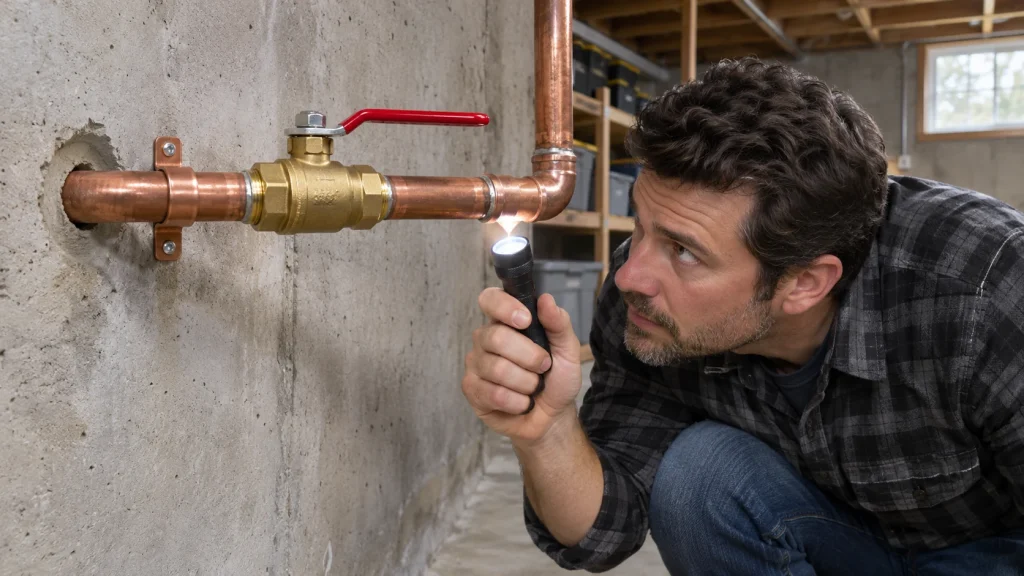
Locate the main water shutoff before applying heat. It’s often near where the water line enters the house. Check the accessible pipe and the area around it for splits, drips, pooling water, or fresh stains. Ice can temporarily plug a crack, so keep the shutoff accessible as the pipe thaws.
If you see signs of a leak, shut off the water if you can do so safely. If standing water is near outlets, wiring, or electrical equipment, stay out of the affected area.
Step 2. Open the affected faucet
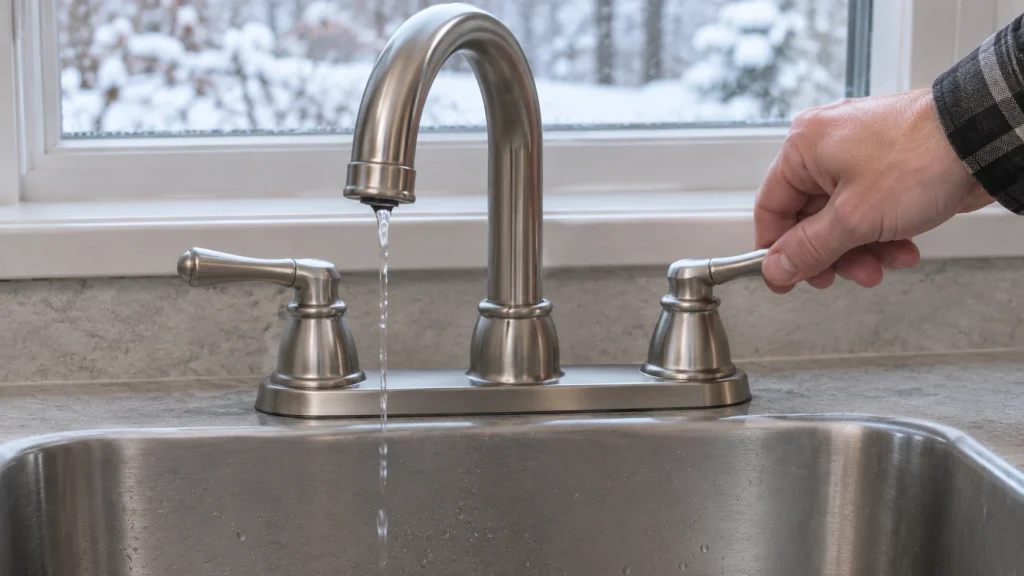
Leave the affected side of the faucet open while you work. The open faucet gives melting water somewhere to go and lets you see when flow begins to return. If the fixture has one handle, turn it toward the side that lost flow.
Step 3. Gently warm the exposed pipe
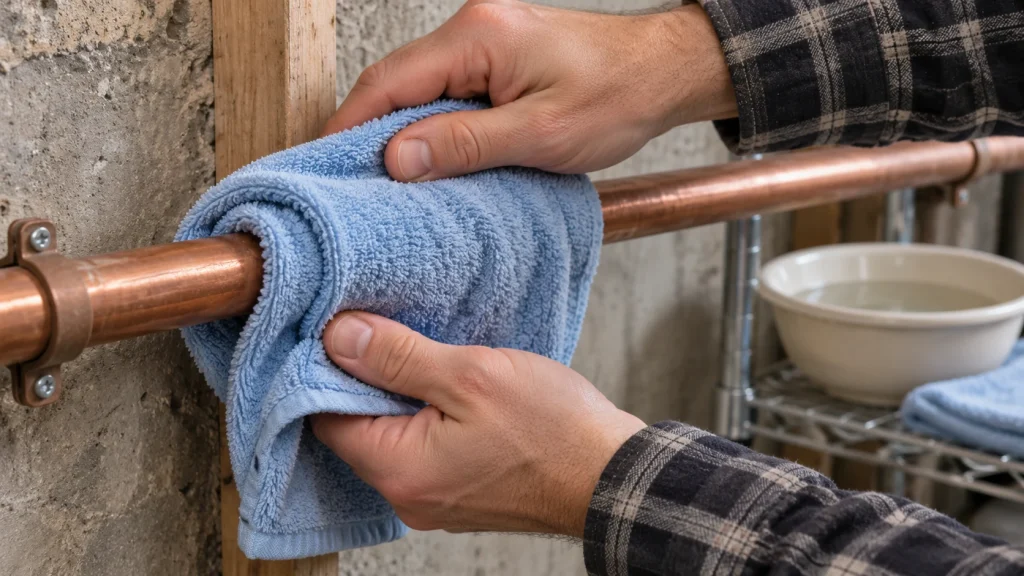
Work from the faucet side toward the suspected frozen section. Wrap the pipe with towels soaked in warm water and refresh them as they cool. If the pipe runs through a cold sink cabinet, open the cabinet doors so room air can circulate around it.
Keep the heat gentle. Never use a torch, open flame, or boiling water. The American Red Cross guide to frozen pipes covers additional thawing methods and prevention tips.
Step 4. Check that normal flow returns and watch for leaks
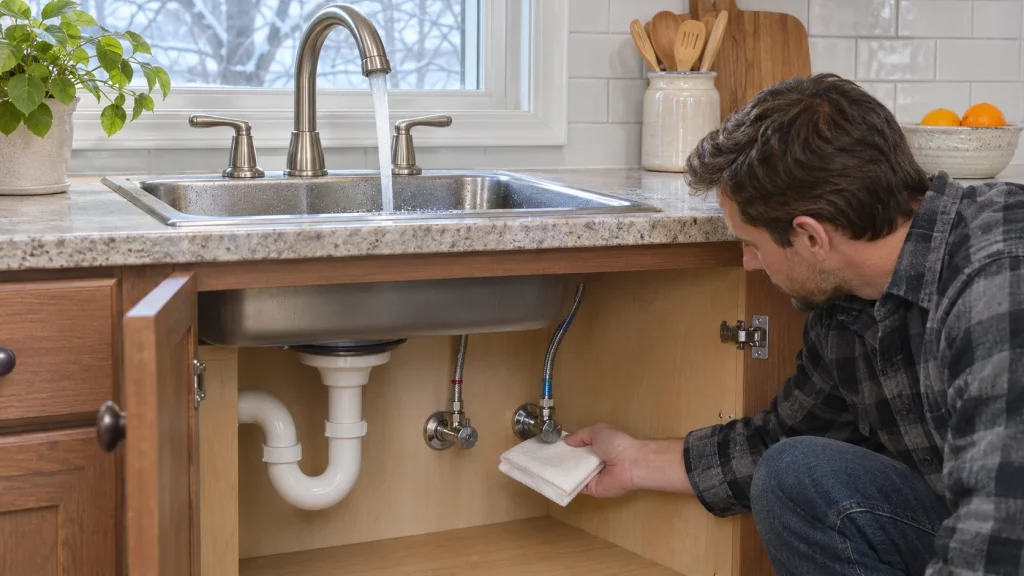
A trickle can mean the ice has started to melt. Keep applying gentle heat until the faucet runs normally. Look along the exposed pipe and around nearby walls, floors, and cabinets as the water returns. Then close the faucet and check again for drips or new wet spots.
If you spot a leak, shut off the main water supply and call a plumber. If flow stays weak, check the other fixtures again. More than one section of pipe may be frozen, or the blockage may be farther upstream.
When to Call a Plumber for Frozen Pipes
Call a licensed plumber if:
- A pipe has split or water is leaking. Shut off the main supply first if you can reach it safely.
- The frozen section is behind a wall, above a ceiling, or in an unsafe crawl space. A plumber can trace the line and determine where access is needed.
- You’ve warmed the exposed pipe and normal flow hasn’t returned. The freeze may be in a different section of pipe.
- The pipe keeps freezing in the same spot. A plumber can help identify whether the line needs more protection or should be rerouted.
If a pipe is leaking and the main shutoff won’t close, contact your water utility for help with an emergency shutoff. If the whole house has lost water and neighbors are affected too, check with the utility about a possible outage. Knowing how to thaw frozen pipes can help with an exposed line, but a pipe hidden behind a wall may need professional attention.
As an Amazon Associate, I earn from qualifying purchases.
How to Thaw Frozen Pipes and Prevent a Repeat Freeze
- Insulate exposed supply pipes in unheated garages, crawl spaces, and other cold areas. Cover exposed supply pipes with pre-slit foam pipe insulation sized to fit the pipe’s outside diameter.
- Seal drafts near plumbing. Look for cold air entering around where pipes pass through exterior walls.
- Disconnect garden hoses before freezing weather. If your outdoor faucet has an indoor shutoff, follow the fixture’s winterizing instructions.
- Open sink cabinet doors during severe cold if the plumbing runs along an exterior wall. Move cleaners out of reach of children and pets first.
- Keep the heat on while you’re away. The American Red Cross recommends setting the thermostat no lower than 55°F when you leave home during cold weather.
- Place a battery-powered water leak alarm beneath a vulnerable sink or near exposed plumbing so you get an audible alert if water reaches the sensor.
Add these jobs to your winter home maintenance checklist so you can address exposed pipes and drafts before the next freeze.
Frequently Asked Questions
Should I shut off the water before thawing a frozen pipe?
Shut off the main water supply if you see a leak or suspect a pipe has burst. If the pipe is exposed, dry, and appears intact, you can leave the water on while gently thawing it with the affected faucet open. Know where the shutoff is and stay nearby so you can act if a leak appears.
Can a frozen pipe burst even if the faucet still drips?
Yes. A trickle can pass through a partially frozen line, and a crack can become visible only after the ice melts. Check the pipe and the surrounding area after full flow returns.
How long does it take to thaw a frozen pipe?
Thawing time depends on how much of the pipe is frozen, how cold it is, and how much of the line you can reach. Use normal faucet flow and a leak check to judge the result. Call a plumber if gentle warming fails to restore flow.
How do I thaw a frozen pipe inside a wall?
If the room is cold, restoring normal indoor heat may help. If you can’t see or safely reach the pipe, call a plumber. If you notice damp drywall, a wet ceiling, or water along a baseboard, shut off the main supply from a safe location and arrange for repair.